
Introduction 🐾
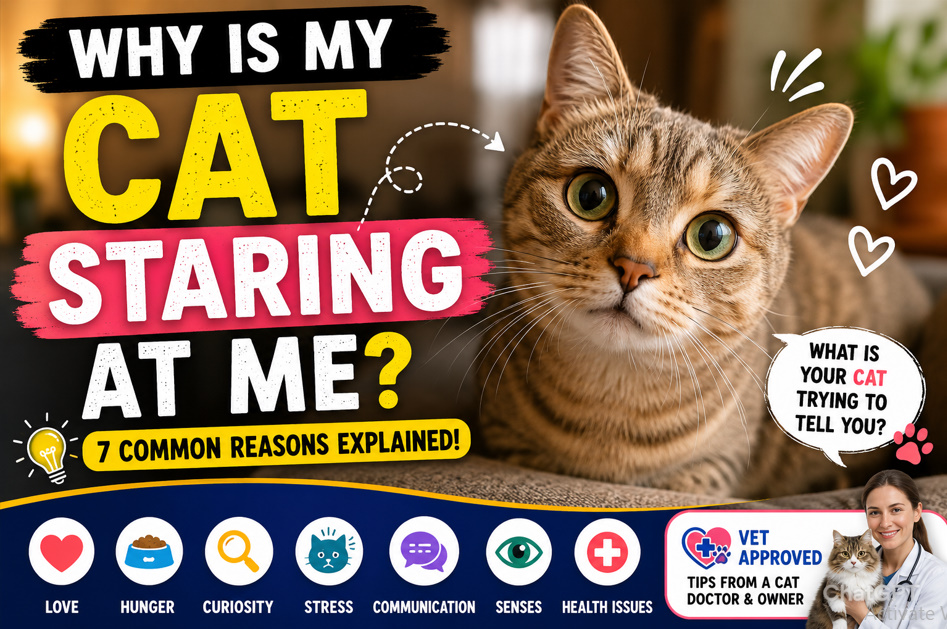
Cats are mysterious pets with unique body language and emotional signals. Many cat owners wonder, “Why is my cat staring at me?” A cat’s intense gaze may seem cute, confusing, or even creepy. Feline staring behavior can reveal affection, curiosity, hunger, anxiety, or health problems. Understanding cat communication helps strengthen your bond and improves your pet’s emotional wellness and daily care. 💖🐱
Your Cat Is Showing Love and Trust ❤️🐈
Cats often stare at humans to express affection and emotional bonding. Slow blinking, relaxed ears, and calm body posture usually mean your cat feels safe around you. In feline psychology, direct eye contact with trusted humans can symbolize comfort, attachment, and social connection inside the home environment every single day lovingly and peacefully.
As a veterinary doctor and cat nutrition specialist, I often tell owners that affectionate staring is common among indoor cats. One Persian cat patient stared at her owner constantly before bedtime because she associated her human with safety and warmth. Positive interaction, healthy cat food, and gentle communication strengthen trust between cats and humans naturally.
Quick Signs of Loving Cat Stares 😻
- 😺 Slow blinking means trust
- 🐾 Relaxed whiskers show comfort
- ❤️ Your cat feels emotionally secure
- 💤 Staring before sleep is common
- 🐈 Calm posture means affection
- 🥰 Friendly eye contact builds bonding
- 🍗 Cats connect food with love
- 🪴 Safe homes reduce stress
- 🎾 Playtime improves attachment
- 🏡 Indoor cats seek companionship
Veterinary & Food Specialist Advice 🩺
Feed your cat high-protein food rich in taurine and omega fatty acids. Healthy nutrition improves emotional stability and feline behavior. Avoid forcing eye contact because anxious cats may feel threatened.
Your Cat Wants Food or Treats 🍗😋
Many cats stare because they expect food, treats, or feeding time. Cats quickly memorize routines and schedules. If you regularly feed your pet at certain hours, your cat may silently stare at you near the kitchen or food bowl as a reminder for meals, snacks, hydration, or favorite wet cat food treats.
During my years as a cat owner, my Maine Coon constantly stared at me every morning exactly before breakfast. As a veterinarian, I also notice overweight cats often develop demanding staring behavior because owners accidentally reward begging with excessive treats. Balanced feeding schedules and portion control are extremely important for feline health.
Hungry Cat Behavior Signs 🍽️
- 🐱 Sitting near the food bowl
- 🍖 Loud meowing with staring
- 👀 Watching you cook meals
- 🥛 Following you into the kitchen
- 😹 Pawing at food containers
- ⏰ Staring at feeding times
- 🍤 Excitement around treats
- 🐾 Walking around your legs
- 😺 Increased vocalization
- 💧 Checking water bowls frequently
Veterinary & Food Specialist Advice 🩺
Choose nutritionally complete cat food with quality animal protein. Avoid overfeeding unhealthy snacks. Scheduled feeding supports digestion, weight management, and better feline behavior.
Your Cat Is Curious About Your Activities 🤔🐾
Cats are naturally curious animals with strong observational instincts. Your cat may stare simply because it wants to understand what you are doing. Whether typing, cleaning, exercising, or talking, cats observe human behavior carefully. Curiosity helps cats feel mentally stimulated and aware of environmental changes happening inside the household surroundings.
I once treated a Bengal cat that stared intensely whenever the owner used a laptop. The cat associated keyboard sounds with attention and entertainment. As both a cat doctor and owner, I recommend interactive toys and climbing spaces because curious cats require mental stimulation to prevent boredom, stress, and destructive behavior at home.
Curious Cat Signs 🧠
- 🐈 Watching moving objects
- 💻 Staring during computer work
- 📦 Exploring new boxes
- 🎮 Observing household activities
- 🧶 Playing with random items
- 🚪 Following people everywhere
- 🔍 Investigating strange sounds
- 🪴 Checking new furniture
- 🐾 Jumping onto counters
- 😺 Watching television screens
Veterinary & Food Specialist Advice 🩺
Provide puzzle feeders, scratching posts, and enrichment toys. Mental stimulation combined with nutrient-rich cat food supports brain health and reduces anxiety-driven behavior.
Your Cat May Feel Stressed or Anxious 😿⚠️
Sometimes a cat’s stare signals stress, fear, or emotional discomfort. Environmental changes like moving homes, loud noises, visitors, or new pets can create feline anxiety. Cats experiencing stress may stare intensely while hiding, twitching tails, flattening ears, or avoiding social interaction. Understanding emotional triggers is essential for maintaining feline mental health.
As a veterinary professional, I once examined a rescue cat that constantly stared at walls and owners after relocation stress. The cat improved after establishing routine feeding schedules and quiet resting spaces. Emotional wellness matters greatly for cats. Calm environments, healthy diets, and patient handling reduce feline anxiety effectively over time.
Signs of Cat Anxiety 😿
- ⚠️ Wide, unblinking eyes
- 🛋️ Hiding under furniture
- 🐾 Excessive grooming habits
- 😾 Aggressive body language
- 🔊 Fear of loud noises
- 🚪 Avoiding strangers
- 💤 Sleeping excessively
- 🥺 Reduced appetite
- 🧶 Nervous tail twitching
- 🏠 Stress after moving homes
Veterinary & Food Specialist Advice 🩺
Use calming cat food supplements containing omega-3 and L-theanine if recommended by your vet. Maintain stable routines and create safe resting areas for anxious cats.
Your Cat Could Be Trying to Communicate 🗣️🐱
Cats communicate through body language, vocal sounds, and eye contact. A staring cat may want attention, playtime, affection, or access to a closed room. Feline communication is subtle compared to dogs, so careful observation helps owners understand their cat’s emotional and physical needs better in everyday life and household interactions naturally.
One Siamese cat I treated stared continuously at her owner every evening until playtime began. As a lifelong cat owner, I learned that cats often train humans successfully through repeated staring and behavior patterns. Interactive engagement, emotional bonding, and responsive care improve communication between cats and their human family members significantly.
Communication Signals From Cats 🐾
- 🎾 Bringing toys to owners
- 😺 Meowing while staring
- 🐈 Sitting directly nearby
- 🚪 Looking at closed doors
- ❤️ Asking for cuddles
- 🧶 Inviting play sessions
- 💤 Seeking bedtime comfort
- 🪟 Watching outdoor activity
- 🐾 Gentle paw touching
- 😻 Rubbing against legs
Veterinary & Food Specialist Advice 🩺
Interactive feeding toys encourage healthy communication and exercise. Spend quality time daily with your cat to strengthen trust and emotional understanding.
Your Cat Might See Something You Cannot 👻👀
Cats possess exceptional hearing, night vision, and environmental awareness. Sometimes cats stare at walls, ceilings, or corners because they detect tiny insects, sounds, or movements humans cannot notice. Their powerful senses make them highly alert animals capable of observing subtle environmental changes hidden from human perception within indoor and outdoor surroundings.
As a veterinarian, many owners asked me if cats see ghosts because their pets stared strangely at empty spaces. In reality, cats often hear electrical sounds, rodents, or distant movement. My own cat once stared at a wall for hours before we discovered tiny insects hiding behind furniture inside the room.
Strange But Normal Cat Behaviors 👀
- 🐜 Detecting hidden insects
- 🎧 Hearing distant noises
- 🌙 Excellent night vision
- 🪟 Watching outdoor birds
- 🐾 Tracking movement carefully
- 👂 Sensitive hearing abilities
- 🐱 Sudden alert body posture
- 🛋️ Focusing on hidden corners
- 🌬️ Reacting to airflow sounds
- 😺 Watching ceiling movement
Veterinary & Food Specialist Advice 🩺
Ensure your cat receives balanced nutrition supporting eye and brain health. Regular veterinary checkups help identify sensory or neurological problems early.
Medical Problems May Cause Excessive Staring 🩺🚨
In some cases, unusual staring behavior may indicate health problems including feline cognitive dysfunction, vision loss, hypertension, seizures, or neurological disorders. Older cats especially may develop confusion and behavioral changes. Persistent staring combined with appetite changes, vocalization, or disorientation requires immediate veterinary examination for proper diagnosis and treatment safely.
I once treated an elderly cat that stared blankly for long periods due to high blood pressure affecting vision. After medication and dietary adjustments, the cat improved significantly. As both a veterinarian and cat owner, I always recommend monitoring sudden behavioral changes because early medical care greatly improves feline health outcomes and longevity.
Warning Signs Requiring a Vet Visit 🚨
- 👀 Blank unresponsive staring
- ⚠️ Sudden aggression changes
- 💤 Extreme confusion
- 🍽️ Appetite loss
- 🚶 Difficulty walking
- 😿 Excessive crying at night
- 🧠 Disorientation symptoms
- 🩺 Vision problems
- 💧 Increased thirst
- 🐾 Unusual repetitive behavior
Veterinary & Food Specialist Advice 🩺
Senior cats benefit from age-specific cat food supporting brain, kidney, and heart health. Schedule regular veterinary wellness exams for early disease detection and preventive care.
Conclusion 🐈💖
If your cat stares at you, the behavior is usually harmless and connected to affection, curiosity, communication, or hunger. However, sudden excessive staring may sometimes indicate anxiety or medical concerns requiring veterinary attention. Understanding feline body language, emotional wellness, and nutritional needs helps create a stronger bond with your beloved cat while ensuring long-term happiness and healthy living. 😺🐾