
Introduction
Water is essential for every cat’s health and survival. Many pet owners wonder how long can a cat go without water when their feline friend refuses to drink. Dehydration can develop quickly and lead to serious health complications. Understanding hydration needs, warning signs, and proper care helps cat owners protect their pets and ensure long-term health, comfort, and well-being.
How Long Can a Cat Go Without Water Safely?
Many pet owners ask, how long can a cat go without water before it becomes dangerous. Most healthy cats can survive only two to three days without water, although dehydration may start much sooner. Adequate hydration supports kidney function, digestion, body temperature regulation, and overall feline health. Fresh drinking water should always be available to prevent health risks.
Quick Facts
- 🐱 Cats need fresh water daily.
- 💧 Dehydration can begin within 24 hours.
- ⚠️ Water is more important than food.
- 🩺 Kidneys depend on proper hydration.
- 🌡️ Water regulates body temperature.
- 🥣 Wet food adds moisture.
- 🚨 Severe dehydration is an emergency.
- 😺 Healthy cats drink regularly.
- 📅 Monitor water intake daily.
- ❤️ Prevention is always better.
Signs of Dehydration in Cats You Should Never Ignore
Recognizing dehydration early can save your cat’s life. Symptoms include dry gums, lethargy, sunken eyes, loss of appetite, and reduced skin elasticity. When considering how long can a cat go without water, remember that individual health conditions affect dehydration speed. Monitoring behavior changes helps detect hydration problems before they become severe.
Warning Signs
- 😿 Dry or sticky gums
- 💤 Excessive sleeping
- 👀 Sunken eyes
- 🚶 Weakness
- 🍽️ Poor appetite
- 💔 Low energy
- 🌡️ Elevated body temperature
- 🚫 Reduced urination
- 🤢 Nausea
- 🩺 Need for veterinary attention
What Happens When a Cat Stops Drinking Water?
A cat’s body begins struggling when water intake stops. Organs require hydration for proper function. The answer to how long can a cat go without water depends on age, health, weather, and diet. Without enough fluids, dehydration progresses, affecting circulation, digestion, and kidney health, potentially leading to life-threatening complications.
Key Effects
- 💧 Fluid loss increases
- 🩺 Kidney stress develops
- ❤️ Circulation slows
- 🍽️ Appetite decreases
- 😴 Fatigue appears
- 🌡️ Temperature control worsens
- 🚽 Less urination occurs
- 😿 Discomfort increases
- ⚠️ Organ function declines
- 🚨 Emergency risk rises
How Long Can Kittens Go Without Water Compared to Adult Cats?
Kittens are more vulnerable to dehydration than adult cats because of their smaller bodies and higher metabolic rates. They can become dehydrated much faster. Understanding how long can a cat go without water is especially important for young kittens. Immediate intervention is necessary if a kitten refuses water for extended periods.
Kitten Hydration Facts
- 🐾 Kittens dehydrate quickly
- 🍼 Young cats need frequent fluids
- ⚠️ Small bodies lose water faster
- 😺 Monitor closely
- 💧 Fresh water is essential
- 🥣 Wet food helps hydration
- 🚨 Seek help early
- ❤️ Growth requires fluids
- 🌡️ Heat affects kittens more
- 🩺 Veterinary care may be needed
Factors That Affect How Long a Cat Can Survive Without Water
Several factors influence hydration needs, including age, health status, diet, activity level, and environmental temperature. Cats eating wet food often receive additional moisture. Diseases such as kidney disease or diabetes increase water requirements. These variables significantly affect how long can a cat go without water before experiencing serious dehydration.
Important Factors
- 🌡️ Weather conditions
- 🐱 Age of the cat
- 🥣 Wet versus dry food
- 🩺 Existing medical conditions
- 🏃 Activity level
- 💧 Daily water intake
- ❤️ Overall health
- 🏠 Indoor or outdoor lifestyle
- 😺 Stress levels
- 🚰 Water availability
My Personal Experience With a Cat That Refused to Drink Water
As a cat owner, I once noticed my cat avoiding the water bowl for nearly a day. She became less active and showed mild dehydration signs. I switched to a fountain and added wet food. Her hydration improved quickly. This experience taught me to monitor drinking habits and act promptly when changes occur.
Lessons Learned
- 😺 Watch daily habits
- 💧 Use fresh water
- 🚰 Try a pet fountain
- 🥣 Offer wet food
- 👀 Observe behavior changes
- ❤️ Act quickly
- 🏠 Keep bowls clean
- 🌡️ Monitor hot weather
- 📅 Track water intake
- 🩺 Consult a vet if needed
A Veterinarian’s Advice on Cats and Water Intake
A veterinarian I consulted explained that dehydration can become dangerous within a short time. They emphasized monitoring fluid consumption and checking for dehydration signs. According to veterinary guidance, healthy hydration supports kidney health, urinary tract function, and digestion. Early intervention can prevent severe complications and costly emergency treatments.
Vet Recommendations
- 🩺 Schedule regular checkups
- 💧 Encourage drinking
- 🚰 Provide multiple water stations
- 🥣 Feed moisture-rich foods
- 👀 Watch for symptoms
- ❤️ Maintain routine care
- 📅 Monitor daily habits
- 🌡️ Prevent overheating
- 😺 Reduce stress
- 🚨 Seek emergency help when necessary
Emergency Steps to Take When Your Cat Won’t Drink Water
If your cat refuses water, act quickly. Offer fresh water in different bowls, use a pet fountain, and provide wet food. Contact a veterinarian if symptoms persist. Knowing emergency hydration strategies helps reduce the risks associated with dehydration and supports faster recovery for affected cats.
Emergency Actions
- 🚰 Refresh water frequently
- 🥣 Offer wet food
- 💧 Use a fountain
- 🏠 Move bowl locations
- 😺 Reduce stress
- 🌡️ Keep environment cool
- 🩺 Call a veterinarian
- 👀 Monitor symptoms
- ❤️ Encourage hydration gently
- 🚨 Seek urgent care if worsening
Best Ways to Keep Your Cat Hydrated Every Day
Hydration prevention is easier than treating dehydration. Fresh water, clean bowls, wet food, and pet fountains encourage drinking. Many cats prefer moving water. Maintaining healthy hydration habits improves urinary tract health, kidney function, and overall wellness while reducing future health concerns.
Hydration Tips
- 💧 Change water daily
- 🚰 Use water fountains
- 🥣 Feed wet food
- 🏠 Place multiple bowls
- 😺 Clean bowls regularly
- 🌡️ Keep water cool
- ❤️ Monitor drinking habits
- 📅 Maintain routine
- 👀 Watch health changes
- 🩺 Schedule wellness visits
When to Contact a Vet for Cat Dehydration Problems
Veterinary attention is necessary if dehydration symptoms worsen or your cat refuses water for an extended period. Severe dehydration can cause organ damage and other serious complications. Understanding how long can a cat go without water helps owners recognize emergencies and seek timely medical care to protect their pet’s health.
Vet Visit Indicators
- 🚨 Severe lethargy
- 😿 Refusal to drink
- 👀 Sunken eyes
- 💔 Weakness
- 🚫 No urination
- 🌡️ Fever
- 🤢 Vomiting
- 🍽️ No appetite
- 🩺 Persistent symptoms
- ❤️ Immediate medical attention needed
Conclusion
Understanding how long can a cat go without water is crucial for every cat owner. Most cats can only survive a few days without adequate hydration, but dehydration can start much sooner. By recognizing symptoms, encouraging water intake, and seeking veterinary care when necessary, you can help your feline companion stay healthy, hydrated, comfortable, and safe throughout life.
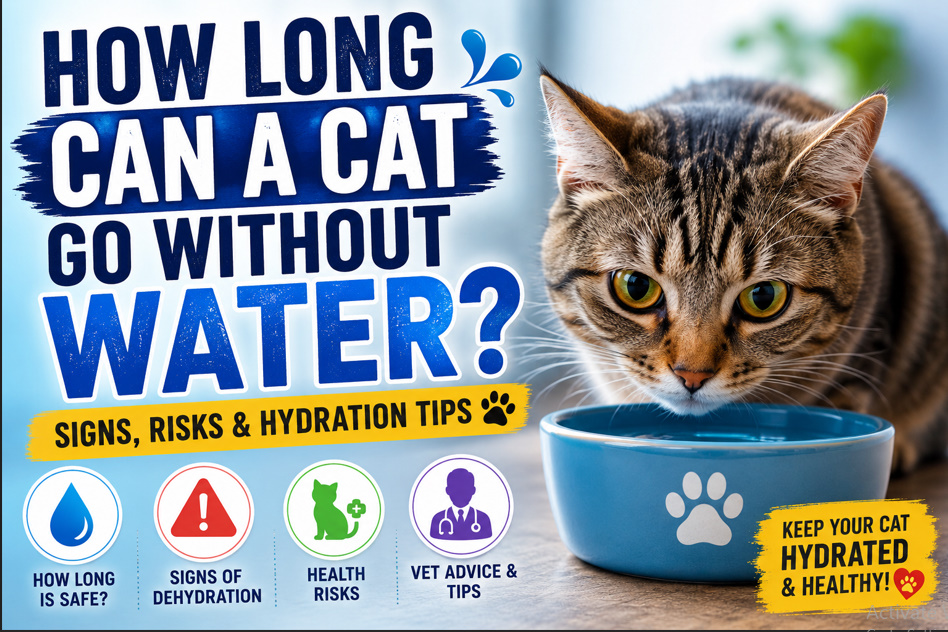
[…] How Long Can a Cat Go Without Water? Signs, Risks & Hydration Tips […]