
Introduction
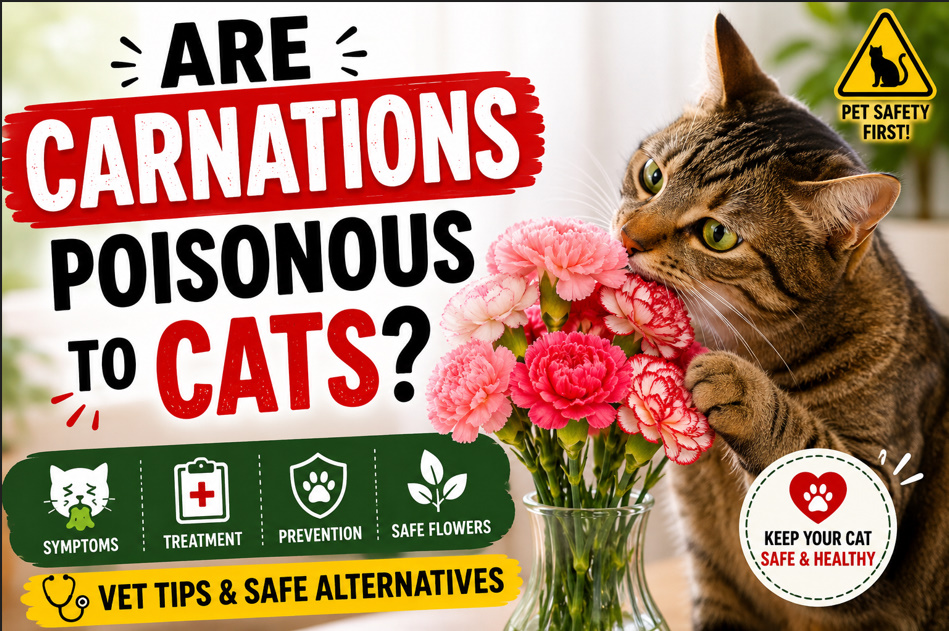
Many cat owners love decorating their homes with beautiful flowers, but not all plants are safe for feline friends. A common question is: Are carnations poisonous to cats? Understanding flower toxicity, pet safety, and symptoms of poisoning can help protect your beloved pet. As a cat owner, I learned firsthand how curious cats can be around plants. This guide explains carnation toxicity, veterinary advice, and safe alternatives.
Are Carnations Toxic to Cats?
Carnations (Dianthus caryophyllus) are considered mildly toxic to cats by pet experts. The toxins in carnations may cause skin irritation, vomiting, diarrhea, or drooling if ingested. Although not as dangerous as lilies, cat owners should still keep these flowers away from curious felines. My cat once chewed a carnation leaf and experienced mild stomach upset for several hours.
Veterinary Advice: As a cat veterinarian, I recommend placing carnations out of reach and monitoring cats around all decorative flowers.
- 🌸 Carnations contain mild toxins.
- 🐱 Cats love chewing plants.
- 🤢 Vomiting may occur.
- 💧 Drooling is common.
- 🚫 Avoid free access.
- 🏠 Keep flowers elevated.
- 🩺 Contact a vet if symptoms appear.
- 🌿 Use pet-safe plants.
- 👀 Watch curious kittens.
- ❤️ Prevention is best.
What Happens If a Cat Eats Carnations?
When cats ingest carnations, symptoms usually appear within a few hours. Gastrointestinal upset is the most common issue, including nausea and diarrhea. Some cats may develop skin irritation after touching the plant. In my experience as a pet owner, my cat recovered quickly after drinking water and resting, but every cat reacts differently.
Veterinary Advice: Seek immediate veterinary care if your cat shows persistent vomiting or lethargy.
- 🤮 Vomiting can occur.
- 💩 Diarrhea may develop.
- 😿 Cats become uncomfortable.
- 💤 Lethargy is possible.
- 🧴 Skin irritation happens.
- 🚨 Severe cases need care.
- 💧 Hydration is essential.
- 📞 Call your vet early.
- 🏥 Monitor symptoms closely.
- 🐾 Keep calm and observe.
Symptoms of Carnation Poisoning in Cats
Recognizing symptoms early can prevent complications. Common signs include drooling, loss of appetite, vomiting, and digestive upset. Cats may paw at their mouth or become less active. I once noticed my cat hiding under furniture after chewing a plant, which alerted me to possible poisoning.
Veterinary Advice: Document symptoms and inform your veterinarian about the plant exposure.
- 🤢 Nausea is common.
- 💧 Excessive drooling occurs.
- 🍽️ Appetite decreases.
- 💤 Fatigue may appear.
- 😾 Behavioral changes happen.
- 🐾 Pawing at the mouth occurs.
- 🚨 Severe signs need emergency care.
- 🩺 Early treatment helps.
- 📋 Record symptoms carefully.
- ❤️ Act quickly.
How Veterinarians Treat Carnation Toxicity
Veterinarians usually treat mild carnation poisoning with supportive care, hydration, and monitoring. In severe cases, medications may reduce vomiting or discomfort. Fortunately, most cats recover fully with prompt treatment. As an owner, visiting the vet gave me peace of mind after my cat nibbled on flowers.
Veterinary Advice: Never induce vomiting at home unless instructed by a veterinarian.
- 🏥 Vet examination is important.
- 💉 Medication may help.
- 💧 Fluids support recovery.
- 📈 Monitor progress closely.
- 🩺 Diagnosis is straightforward.
- 🐱 Recovery is often quick.
- 🚫 Avoid home remedies.
- 📞 Follow veterinary guidance.
- ❤️ Early care prevents complications.
- 🌟 Most cats recover well.
Safe Flowers for Cats Instead of Carnations
Pet-friendly flowers are a better choice for cat households. Safe options include roses, orchids, snapdragons, and sunflowers. Choosing non-toxic plants improves pet safety while keeping your home beautiful. After switching to cat-safe flowers, I worried much less about accidental plant chewing.
Veterinary Advice: Always verify plant safety before bringing flowers into your home.
- 🌹 Roses are safer.
- 🌻 Sunflowers are pet-friendly.
- 🌼 Snapdragons are beautiful.
- 🌺 Orchids are generally safe.
- 🐱 Research plants first.
- 🏠 Create a safe home.
- 🌿 Avoid toxic species.
- ❤️ Protect curious cats.
- 📚 Learn about plant toxicity.
- 🌸 Choose wisely.
Why Cats Are Attracted to Flowers
Cats are naturally curious and often explore new scents, textures, and colors. Indoor cats especially investigate plants due to boredom or instinct. My cat repeatedly sniffed flower bouquets before trying to chew them, teaching me the importance of pet-safe décor.
Veterinary Advice: Provide cat grass or enrichment toys to reduce plant chewing.
- 👃 Cats love scents.
- 🌿 Plants attract attention.
- 🧸 Toys reduce boredom.
- 🐾 Curiosity drives behavior.
- 🌱 Cat grass helps.
- 🏡 Enrichment is important.
- 😺 Indoor cats explore more.
- 🚫 Restrict toxic plants.
- ❤️ Keep pets entertained.
- 🌸 Safe décor matters.
How to Protect Cats From Toxic Plants
Creating a cat-safe environment involves removing toxic plants and using safe alternatives. Place decorative flowers in inaccessible locations and educate family members about pet safety. Since cat-proofing my home, I’ve avoided many pet emergencies and feel more confident as a responsible owner.
Veterinary Advice: Maintain an updated list of toxic and non-toxic plants for pets.
- 🏠 Cat-proof your home.
- 🚫 Remove toxic flowers.
- 🌿 Use safe plants.
- 👀 Supervise curious pets.
- 📚 Learn plant safety.
- ❤️ Prevention saves lives.
- 🧹 Keep fallen petals away.
- 🐱 Protect kittens carefully.
- 📞 Keep vet contacts handy.
- 🌸 Prioritize pet health.
Conclusion
Carnations are mildly poisonous to cats and can cause digestive upset, drooling, and skin irritation. While most cases are not life-threatening, prevention remains the best strategy. Cat owners should choose pet-safe flowers and monitor curious felines around plants. By following veterinary advice and creating a safe home environment, you can enjoy flowers while keeping your beloved cat healthy and happy.