
Introduction
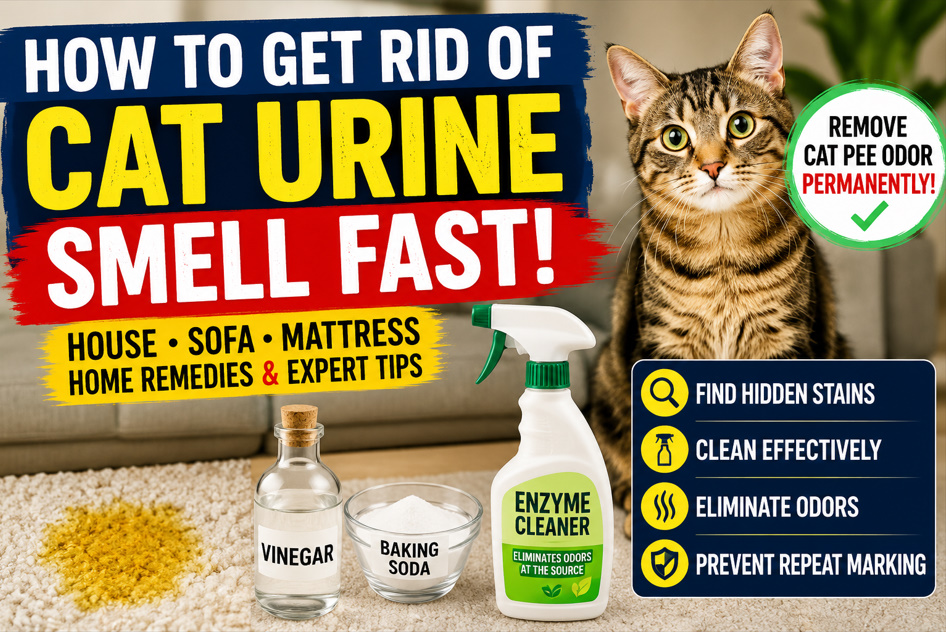
Cat urine odor is one of the most challenging pet smells to eliminate from a home. Whether the accident occurred on a carpet, mattress, sofa, or hidden corner, lingering urine crystals can cause persistent odors. In this guide, you’ll learn effective methods, home remedies, enzyme cleaner solutions, and expert veterinary tips to get rid of cat urine smell fast and keep your house fresh.
Enzyme Cleaner for Cat Urine
Cat urine contains uric acid crystals that can remain trapped in carpets, upholstery, hardwood floors, and fabric. Regular household cleaners often remove surface stains but fail to break down the odor-causing compounds. An enzyme cleaner for cat urine works by digesting organic matter, eliminating both stains and lingering pet odor from affected areas.
As a cat owner, I once struggled with a strong urine smell on my living room carpet. Even after multiple cleanings, the odor returned whenever humidity increased. After using a quality enzymatic cleaner, the smell disappeared completely. This solution helped restore freshness while preventing my cat from repeatedly marking the same spot.
As a veterinary professional, I recommend enzyme-based cleaners because they target the biological source of the odor instead of masking it. Always follow the manufacturer’s instructions and allow sufficient drying time. Avoid ammonia-based products since they can mimic urine scent and encourage cats to urinate in the same location again.
Proper odor removal is essential for maintaining a healthy indoor environment. Whether dealing with fresh accidents or older stains, enzyme cleaners remain one of the most effective solutions for cat urine odor removal, litter box smells, pet stain treatment, and home deodorization.
Quick Tips 🐱
- 🧴 Use enzyme cleaners immediately after accidents.
- 🐾 Blot urine before applying cleaner.
- 🚫 Avoid ammonia-based cleaning products.
- 🏡 Test cleaner on hidden fabric areas.
- 💨 Let treated areas air dry naturally.
- 🧽 Repeat treatment for severe odors.
- 🐈 Prevent remarking with complete odor removal.
- 🛋️ Use on carpets, rugs, and upholstery.
- 🔍 Locate hidden stains with UV light.
- 🌿 Keep your home smelling fresh.
Old Cat Urine Odor Removal Home Remedy
Old cat urine odors can become deeply embedded in flooring, mattresses, furniture, and subfloors. Home remedies often help reduce unpleasant smells when commercial products are unavailable. Common solutions include white vinegar, baking soda, warm water, and hydrogen peroxide, which can neutralize some odor molecules and freshen affected areas.
I remember discovering an old urine stain behind a sofa months after my cat had an accident. The smell became stronger during rainy weather. After applying a mixture of vinegar and water followed by baking soda, the odor improved significantly. While not perfect, the remedy provided temporary relief before deeper cleaning.
As a veterinarian, I advise pet owners to understand that home remedies may not fully eliminate uric acid crystals. For severe or recurring odors, enzyme cleaners are usually more effective. However, vinegar and baking soda remain useful for light contamination and routine pet odor maintenance.
Consistency is important when treating old cat urine stains. Thorough cleaning, proper ventilation, and repeated applications may be necessary. Combining odor-neutralizing methods with good litter box hygiene helps maintain a fresh-smelling home while supporting your cat’s overall comfort and well-being.
Quick Tips 🐱
- 🧂 Sprinkle baking soda generously.
- 🍶 Mix vinegar with warm water.
- 🧽 Scrub affected areas gently.
- 🌬️ Improve room ventilation.
- ☀️ Allow surfaces to dry completely.
- 🔍 Find hidden stains quickly.
- 🚫 Avoid bleach on urine stains.
- 🏡 Clean surrounding surfaces too.
- 🐾 Treat accidents immediately.
- ✨ Repeat if odor remains.
How to Get Cat Urine Smell Out of a Mattress When Dry
Dry cat urine in a mattress presents a unique challenge because the liquid penetrates deep into internal layers. Even after the surface appears clean, odor-causing compounds may remain trapped inside foam and fabric. Effective mattress deodorizing requires deep cleaning methods that target embedded urine crystals and pet-related bacteria.
One of my cats urinated on a guest room mattress, and I didn’t discover it for several days. The smell became noticeable only when entering the room. After vacuuming, applying an enzyme cleaner, and allowing the mattress to dry thoroughly, the odor was finally eliminated without replacing the mattress.
As a veterinary expert, I recommend avoiding excessive water because moisture trapped inside mattresses can encourage mold growth. Apply enzyme cleaners sparingly, follow product directions carefully, and use fans to accelerate drying. If the odor persists after several treatments, professional mattress cleaning may be required.
Maintaining a clean sleeping environment benefits both humans and pets. Proper urine stain removal helps eliminate odors, allergens, bacteria, and unpleasant smells while extending mattress lifespan and improving indoor air quality.
Quick Tips 🐱
- 🛏️ Vacuum the mattress first.
- 🧴 Apply enzyme cleaner evenly.
- 💨 Use fans for drying.
- ☀️ Place mattress in sunlight.
- 🚫 Avoid soaking the mattress.
- 🧽 Blot excess moisture quickly.
- 🔍 Check edges and seams.
- 🐾 Treat stains as soon as possible.
- 🌿 Use baking soda overnight.
- ✨ Vacuum residue thoroughly.
My House Smells Like Cat Pee but I Can’t Find It
When your house smells like cat pee but no visible accident can be found, hidden urine stains are often the culprit. Cats may urinate behind furniture, under beds, inside closets, on carpets, or near walls. Humidity can reactivate old odors, making the smell suddenly noticeable again.
I experienced this frustrating situation after moving furniture during a deep cleaning session. The odor seemed to come and go for weeks. Eventually, a UV blacklight revealed several hidden urine spots beneath a couch. After thorough cleaning, the mysterious smell finally disappeared.
From a veterinary perspective, sudden inappropriate urination may indicate stress, territorial marking, litter box issues, or medical conditions such as urinary tract disease. If your cat suddenly starts urinating outside the litter box, schedule a veterinary examination to rule out underlying health concerns.
Finding hidden urine sources requires patience and systematic inspection. Use a UV flashlight, check soft furnishings, inspect corners, and evaluate litter box cleanliness. Addressing both the odor and the reason behind the behavior helps create a healthier, fresher home environment.
Quick Tips 🐱
- 🔦 Use a UV blacklight.
- 🛋️ Check behind furniture.
- 🚪 Inspect closets and corners.
- 🐾 Examine carpets carefully.
- 🧴 Clean detected stains thoroughly.
- 🐈 Monitor litter box habits.
- 🏥 Schedule a vet visit if needed.
- 🌬️ Improve airflow indoors.
- 🧹 Deep-clean frequently.
- ✨ Eliminate odors completely.
How to Get Rid of Cat Urine Smell Fast
Cat urine odor can quickly spread throughout a room because of its strong ammonia-like compounds and uric acid crystals. Acting fast is the key to preventing permanent stains and lingering pet odors. Immediate cleaning helps stop bacteria growth while reducing the chances of repeat marking behavior from your cat.
As a cat owner, I once discovered a fresh urine accident on my hallway carpet. I immediately blotted the area, applied an enzymatic cleaner, and allowed it to dry naturally. The odor disappeared within hours, proving that quick action can make a huge difference in odor control and stain removal.
As a veterinarian, I recommend removing as much urine as possible before applying any cleaning solution. Never rub the stain aggressively because this pushes urine deeper into fibers. Fast treatment protects carpets, furniture, and flooring from long-term odor contamination.
Using odor-neutralizing products, proper ventilation, and enzyme-based cleaners provides the quickest results. These methods effectively eliminate pet urine smell, cat odor, urine stains, household odors, and bacteria while keeping your home fresh and hygienic.
Quick Tips 🐱
- 🧻 Blot fresh urine immediately.
- 🧴 Use an enzyme cleaner.
- 🚫 Avoid ammonia cleaners.
- 💨 Open windows for ventilation.
- 🧽 Clean the area thoroughly.
- 🌞 Allow natural drying.
- 🔍 Check for hidden spots.
- 🐾 Prevent repeat marking.
- 🏡 Deodorize surrounding areas.
- ✨ Act within minutes.
How to Get Rid of Cat Urine Smell in House
A cat urine smell throughout the house often indicates hidden accidents, old stains, or litter box issues. Urine odors can become trapped in carpets, curtains, upholstery, flooring, and air vents. Finding and treating every affected area is essential for complete odor elimination and indoor air quality improvement.
I once noticed a persistent urine smell despite cleaning visible accidents. After using a UV flashlight, I found several hidden spots under furniture and near walls. Cleaning those areas with enzyme cleaners completely transformed the smell of my home and restored freshness.
As a veterinary doctor, I advise checking your cat’s health if inappropriate urination becomes frequent. Medical issues, stress, territorial behavior, and litter box dissatisfaction can all contribute to accidents around the house.
Maintaining a clean litter box, treating urine stains properly, and improving ventilation helps eliminate unpleasant odors. These practices support a cleaner environment while reducing odor buildup, bacteria growth, pet dander, and indoor air contaminants.
Quick Tips 🐱
- 🔦 Use a UV light.
- 🛋️ Check under furniture.
- 🚪 Inspect hidden corners.
- 🧴 Clean with enzymes.
- 🐈 Scoop litter daily.
- 💨 Improve ventilation.
- 🧹 Vacuum regularly.
- 🏡 Wash pet bedding.
- 🚫 Avoid odor-masking sprays.
- ✨ Treat every stain.
How to Get Rid of Cat Urine Smell on Sofa
Cat urine on a sofa can be particularly difficult because fabric and cushions absorb liquid deeply. If not treated correctly, urine crystals remain trapped inside the upholstery and release odors repeatedly. Deep cleaning techniques are necessary to remove both the stain and the source of the smell.
One of my cats once urinated on a fabric sofa while I was away. Although the stain appeared dry, the smell remained strong. After applying an enzyme cleaner and allowing it to penetrate the cushion, the odor disappeared completely after drying.
As a veterinarian, I recommend testing cleaning products on an inconspicuous area first. Avoid excessive water saturation because trapped moisture can lead to mold, mildew, and additional odor problems inside furniture cushions.
Proper sofa cleaning removes pet odor, bacteria, allergens, urine residue, and unpleasant smells. Regular maintenance also helps preserve upholstery quality while creating a cleaner and healthier living environment.
Quick Tips 🐱
- 🛋️ Blot urine immediately.
- 🧴 Use upholstery-safe enzyme cleaner.
- 🚫 Don’t scrub aggressively.
- 💨 Increase airflow.
- 🌞 Dry thoroughly.
- 🧽 Clean cushion interiors.
- 🔍 Check hidden seams.
- 🐾 Prevent future accidents.
- 🧹 Vacuum after drying.
- ✨ Repeat if necessary.
Old Cat Urine Odor Removal Home Remedy Vinegar
White vinegar is one of the most popular home remedies for reducing old cat urine odors. Its acidic properties help neutralize alkaline compounds found in dried urine. While vinegar may lessen odors significantly, it often works best on mild stains rather than severe or deeply embedded contamination.
I discovered an old urine stain beneath a bookshelf that had gone unnoticed for months. A vinegar and warm water solution helped reduce the odor considerably. After multiple applications and proper drying, the room smelled much fresher than before.
As a veterinary professional, I advise pet owners to understand that vinegar does not completely break down uric acid crystals. For stubborn odors, enzyme cleaners remain the gold standard. Vinegar works best as a temporary or supplemental odor-control method.
Combining vinegar, baking soda, and good ventilation can improve odor removal results. These techniques help neutralize pet smells, freshen indoor spaces, reduce bacteria, and support a cleaner household environment.
Quick Tips 🐱
- 🍶 Mix equal parts vinegar and water.
- 🧽 Apply to affected area.
- ⏳ Let it sit 10 minutes.
- 🧂 Add baking soda afterward.
- 💨 Improve air circulation.
- 🚫 Avoid bleach products.
- ☀️ Allow complete drying.
- 🔍 Locate all stains.
- 🐾 Repeat treatment if needed.
- ✨ Use enzyme cleaners for severe odors.
Conclusion
Removing cat urine smell requires finding the source, using the right cleaning methods, and preventing future accidents. From enzyme cleaners to vinegar-based home remedies, several solutions can help eliminate stubborn odors from your house, sofa, or mattress. With proper cleaning, litter box maintenance, and veterinary guidance when needed, you can enjoy a cleaner, fresher, and odor-free home for both you and your cat.