
Introduction 🐾
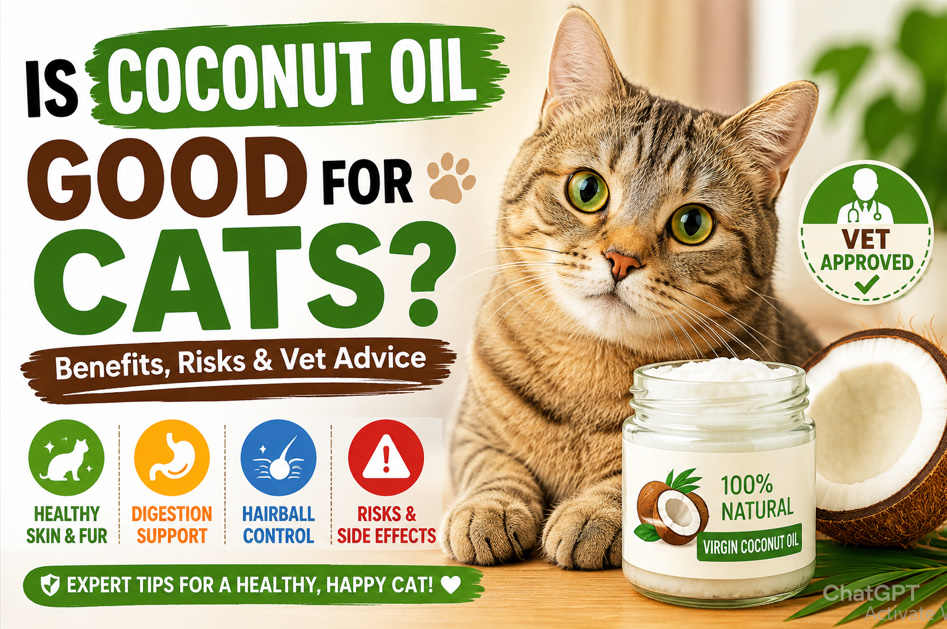
Many cat owners wonder whether coconut oil is safe and healthy for feline companions. 🥥🐱 Coconut oil has become popular for improving cat skin health, digestion, dry fur, and hairballs. Some veterinarians recommend it in small amounts, while others advise caution. Understanding both benefits and risks helps pet parents make smart decisions for overall cat wellness and nutrition naturally.
What Is Coconut Oil and Why Do Cat Owners Use It? 🥥🐈
Coconut oil is a natural oil extracted from mature coconuts. It contains medium-chain triglycerides, healthy fats, lauric acid, and antioxidants. Many pet owners use coconut oil for dry skin, cat dandruff, digestive support, and shiny fur. Organic virgin coconut oil is often preferred because it contains fewer processed ingredients and maintains nutritional value.
As a veterinary consultant and cat nutrition specialist, I usually recommend introducing coconut oil slowly into a cat’s diet. During my clinic experience, one Persian cat suffering from flaky skin showed visible improvement after controlled coconut oil application. However, excessive use caused mild diarrhea in another cat, proving moderation always matters for feline health.
Quick Facts & Tips 🐾
- 🥥 Coconut oil contains healthy fatty acids
- 🐱 Some cats enjoy its taste naturally
- ✨ It may improve coat shine
- 💩 Overuse can trigger stomach upset
- 🧴 Useful for dry paw pads
- 🐾 Helps reduce mild dandruff
- 🐈 Start with tiny amounts only
- ❤️ Organic virgin oil is best
- ⚠️ Avoid flavored coconut products
- 👨⚕️ Always consult a veterinarian first
Vet & Specialist Advice 👨⚕️
A small dose mixed with wet cat food is safer than direct spoon feeding. Always monitor allergic reactions or digestive discomfort carefully.
Coconut Oil Benefits for Cat Skin and Fur ✨🐈
One major reason cat owners use coconut oil is skin and coat improvement. Dry skin, itching, and flaky fur are common problems in indoor cats. Coconut oil works as a natural moisturizer and may support healthier fur texture. Lauric acid possesses antimicrobial properties that can soothe mild skin irritation and dryness effectively.
In my personal experience as both a cat owner and veterinary assistant, an older rescue cat with dull fur improved significantly after weekly coconut oil treatment. Her shedding reduced, and fur became softer within weeks. However, oily buildup occurred when applied excessively. Controlled topical use works better than over-application on sensitive feline skin.
Skin Care Benefits 🌟
- ✨ Supports shiny fur
- 🐾 Moisturizes dry paws
- 🐱 Helps flaky skin
- 🧴 Reduces rough coat texture
- 🦠 Contains antimicrobial compounds
- 🌿 Natural skin conditioner
- 🐈 May reduce itching
- 💖 Supports grooming health
- 🛁 Easy topical application
- ⚠️ Avoid excessive greasiness
Vet & Specialist Advice 👨⚕️
Use only a pea-sized amount on fur and skin. Cats groom themselves constantly, so excessive oil may upset digestion after licking.
Can Coconut Oil Help Cat Digestion and Hairballs? 🐱🥥
Many holistic pet care advocates believe coconut oil may support digestive health and reduce hairballs naturally. Healthy fats can lubricate the digestive tract and help swallowed fur pass more easily. Some cat owners report fewer constipation episodes after introducing tiny coconut oil servings into regular wet cat food diets carefully.
During my veterinary clinic practice, I observed mixed results regarding digestive benefits. One Maine Coon experienced fewer hairballs after daily micro-doses, while another overweight cat developed loose stools quickly. Digestive tolerance varies among felines. Monitoring bowel movements, appetite, and energy levels is extremely important whenever introducing dietary supplements or natural oils.
Digestive Support Tips 🍽️
- 🥥 May help hairball control
- 💩 Supports smoother digestion
- 🐈 Tiny doses work best
- ⚠️ Too much causes diarrhea
- 🍗 Mix with wet food
- 🐾 Observe stool consistency
- 🧡 Introduce gradually
- 🐱 Keep fresh water available
- 🌿 Natural dietary supplement
- 👨⚕️ Vet supervision is recommended
Vet & Specialist Advice 👨⚕️
Never replace balanced cat nutrition with coconut oil. It should remain a supplement, not a primary nutrition source.
Potential Risks and Side Effects of Coconut Oil for Cats ⚠️🐾
Although coconut oil offers benefits, it also carries risks for certain cats. Excessive fat intake may contribute to obesity, pancreatitis, vomiting, or diarrhea. Cats with sensitive stomachs, liver conditions, or weight issues require extra caution. Some felines may even experience allergic skin reactions after topical application or dietary consumption unexpectedly.
I once treated a British Shorthair whose owner believed natural oils were always harmless. Unfortunately, excessive coconut oil feeding caused severe digestive distress and weight gain. This experience taught me that “natural” does not always mean completely safe. Controlled portions and professional veterinary guidance remain essential for maintaining healthy feline nutrition safely.
Risks to Remember ⚠️
- 🚫 Excess can cause obesity
- 💩 Diarrhea is common
- 🤢 Vomiting may occur
- 🐱 Some cats dislike taste
- ⚖️ Monitor calorie intake
- 🧴 Greasy fur attracts dirt
- 🦠 Allergic reactions are possible
- 🐾 Sensitive cats need caution
- ❤️ Pancreatitis risk exists
- 👨⚕️ Seek vet guidance immediately
Vet & Specialist Advice 👨⚕️
Avoid coconut oil completely for cats with chronic pancreatitis or severe obesity unless specifically approved by your veterinarian.
How Much Coconut Oil Should You Give a Cat? 🥄🐈
Portion control is extremely important when feeding coconut oil to cats. Most veterinarians suggest starting with one-quarter teaspoon daily for adult cats. Kittens require even smaller amounts. Gradual introduction helps prevent digestive problems and allows owners to monitor reactions. High-quality organic virgin coconut oil remains the safest option for feline consumption.
As a long-time cat owner, I learned moderation through trial and error. My Siamese cat tolerated tiny doses perfectly but experienced digestive upset after larger servings. Measuring accurately made a huge difference. Cat nutrition should prioritize protein-rich meals first, while coconut oil should remain only an occasional supplemental wellness ingredient.
Feeding Guidelines 📏
- 🥄 Start with tiny servings
- 🐱 One-quarter teaspoon is enough
- 🍽️ Mix into cat food
- ⚠️ Avoid daily overfeeding
- 🐾 Observe energy levels
- 💧 Provide fresh water
- 🥥 Use virgin coconut oil
- 🧡 Introduce gradually
- ⚖️ Watch weight changes
- 👨⚕️ Follow veterinary recommendations
Vet & Specialist Advice 👨⚕️
Stop immediately if your cat develops vomiting, diarrhea, lethargy, or appetite loss after consuming coconut oil.
Best Ways to Apply Coconut Oil for Cats 🧴🐾
Coconut oil can be used both internally and externally depending on your cat’s needs. Topical application works well for dry skin, cracked paw pads, and dull fur. Oral use may support digestion or hairball management. Choosing the right method helps maximize benefits while minimizing unwanted side effects or greasy residue.
In my rescue shelter volunteering experience, topical coconut oil worked best for senior cats suffering from winter dryness. Applying a thin layer after grooming improved comfort noticeably. However, oral use required stricter supervision because some cats overate oily food quickly. Individual feline preferences and health conditions greatly influence coconut oil effectiveness.
Application Tips 🐱
- 🧴 Apply thin layers only
- 🐾 Massage gently into skin
- 🥥 Mix tiny amounts in food
- ✨ Best after grooming sessions
- 🛁 Avoid eye contact
- ⚠️ Prevent over-licking
- 🐈 Monitor allergic reactions
- 🌿 Use pure organic oil
- ❤️ Keep fur clean afterward
- 👨⚕️ Ask your vet for guidance
Vet & Specialist Advice 👨⚕️
Patch-test coconut oil on a small skin area before full application to avoid unexpected allergic irritation.
Is Coconut Oil Really Good for Cats? Final Verdict 🐈🥥
Coconut oil can offer benefits for cats when used responsibly and moderately. Improved skin hydration, softer fur, and mild digestive support are commonly reported advantages. However, not every cat responds positively. Breed, age, weight, and underlying medical conditions influence whether coconut oil becomes beneficial or problematic for feline wellness and nutrition.
After years of observing cats professionally and personally, I believe coconut oil should never replace balanced veterinary-approved diets or medical treatment. It works best as a supplemental wellness product under careful supervision. Responsible cat ownership means understanding both advantages and risks before introducing trendy natural remedies into everyday feline care routines.
Final Takeaways 🌟
- 🥥 Coconut oil may help some cats
- 🐱 Moderation is extremely important
- ⚠️ Side effects are possible
- ✨ Fur improvement is common
- 💩 Digestive reactions vary
- 🧴 Topical use is safer
- ❤️ Every cat responds differently
- 🐾 Monitor health carefully
- 👨⚕️ Vet approval matters most
- 🌿 Balanced nutrition comes first
Vet & Specialist Advice 👨⚕️
Use coconut oil only as a supplemental aid and prioritize species-appropriate feline nutrition for long-term cat health.
Conclusion 🐾
Coconut oil can be beneficial for cats when used correctly and carefully. 🥥🐱 It may improve coat shine, skin hydration, and hairball management, but excessive amounts can create digestive or weight-related problems. Every cat reacts differently, so veterinary consultation remains essential. Responsible usage, moderation, and balanced feline nutrition are the safest approaches for keeping cats healthy and happy.