
Introduction
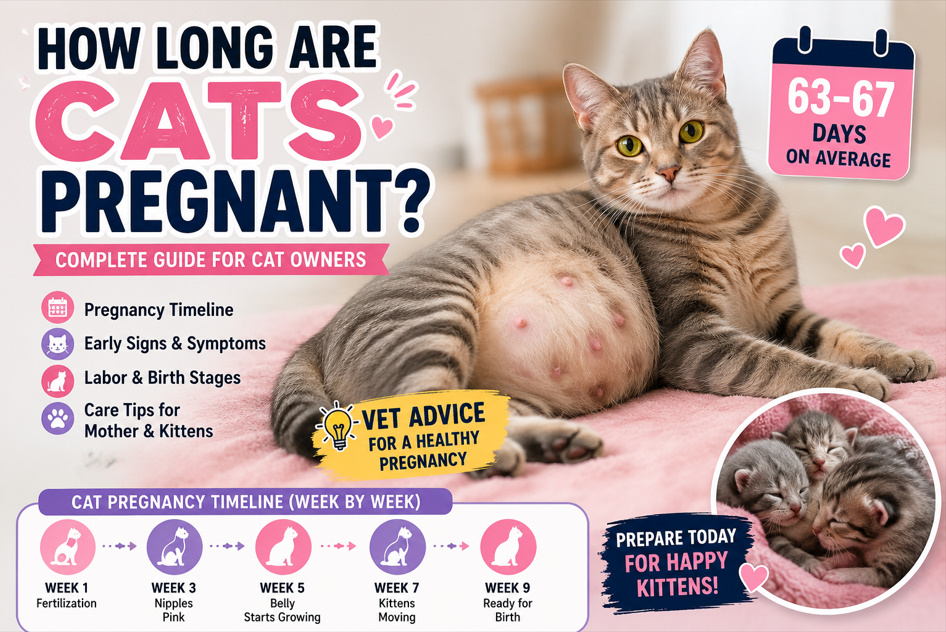
Cats are fascinating animals, and pregnancy in cats, also called the gestation period, is an exciting journey for pet owners. Many people ask, “How long are cats pregnant?” On average, a cat pregnancy lasts 63 to 67 days, though some pregnancies may range from 58 to 72 days depending on breed, health, and age. Understanding feline pregnancy helps ensure proper care for the mother and kittens.
Whether you’re a first-time cat owner or an experienced pet parent, learning about feline reproduction, pregnant cat stages, and kitten development can help you prepare for a healthy delivery. This guide covers signs, stages, and expert advice from a veterinary perspective.
Early Signs a Cat Is Pregnant
One of the earliest signs of cat pregnancy is called “pinking up,” where the nipples become larger and pinker around three weeks after mating. Your cat may also become more affectionate, eat more food, and sleep longer than usual. These pregnancy symptoms often indicate hormonal changes during feline gestation.
As a cat owner, I once noticed my cat suddenly becoming unusually loving and seeking quiet places to rest. Within a few weeks, her appetite increased significantly. A veterinary checkup confirmed pregnancy, helping us prepare for the arrival of healthy kittens and provide proper prenatal care.
👨⚕️ Veterinary Advice: Schedule a vet visit around 3–4 weeks after mating. Ultrasound examinations can confirm pregnancy and monitor kitten development.
Quick Facts 🐱
- 🍼 Cats are pregnant for about 63–67 days.
- 💗 Pink nipples are an early sign.
- 😴 Pregnant cats sleep more.
- 🍗 Appetite often increases.
- 🐾 Behavior may become affectionate.
- 🏠 Cats seek quiet nesting areas.
- 🩺 Veterinary visits are important.
- ⚖️ Healthy weight gain is normal.
- 💧 Fresh water should always be available.
- ❤️ Stress-free environments help pregnancy.
Pregnant Cat Week by Week Pictures
Although every cat is different, visual changes occur throughout pregnancy. During weeks 1–3, physical signs are subtle, while weeks 4–6 bring noticeable belly enlargement. By weeks 7–9, kittens can often be felt moving inside the abdomen, and nesting behavior increases.
I remember comparing my cat’s appearance weekly with online pregnancy charts. Watching her belly grow each week made the experience exciting and educational. Taking photos also helped track changes and recognize when labor was approaching.
👨⚕️ Veterinary Advice: Avoid pressing your cat’s abdomen to feel kittens. Improper handling may harm developing fetuses.
Quick Facts 📸
- 📅 Week 1 shows few changes.
- 💗 Week 3 brings pink nipples.
- 🍽️ Week 4 increases appetite.
- 🤰 Week 5 shows belly growth.
- 🐾 Week 6 reveals fetal movement.
- 🛏️ Week 7 starts nesting.
- 🧶 Week 8 seeks privacy.
- ⏳ Week 9 prepares for labor.
- 📷 Photos help monitor changes.
- 🩺 Vet checkups ensure health.
How Many Times Can a Cat Get Pregnant in a Year?
Cats are highly fertile animals and can become pregnant several times each year. Female cats are seasonally polyestrous, meaning they experience multiple heat cycles. A cat can potentially have 2–5 litters annually, depending on climate, breed, and reproductive health.
A neighbor’s cat once had multiple litters in one year because she was not spayed. Managing so many kittens became challenging. This experience highlighted the importance of responsible pet ownership and population control through spaying.
👨⚕️ Veterinary Advice: Spaying your cat after weaning reduces the risk of unwanted pregnancies and certain reproductive diseases.
Quick Facts 🐈
- 🔄 Cats have multiple heat cycles.
- 🌞 Breeding increases in warm seasons.
- 🍼 Cats can have several litters yearly.
- 🐾 Pregnancy may occur quickly after birth.
- 🏥 Spaying prevents overpopulation.
- ❤️ Healthy cats reproduce efficiently.
- 🌍 Stray populations grow rapidly.
- 📅 Heat cycles last several days.
- 🐱 Litters often contain multiple kittens.
- ⚕️ Vet guidance improves reproductive health.
Pregnant Cat Belly Stages
The belly of a pregnant cat changes gradually throughout gestation. During early pregnancy, there is little visible enlargement. By the middle stages, abdominal expansion becomes noticeable. Near labor, the belly appears larger and lower as kittens prepare for birth.
When my cat reached the final weeks, her belly seemed to sway gently as she walked. Watching kitten movements was amazing and reassured me that the pregnancy was progressing normally. Providing a comfortable nesting box helped her feel secure.
👨⚕️ Veterinary Advice: Feed high-quality kitten food during late pregnancy to support both mother and developing kittens.
Quick Facts 🤰
- 🐾 Early stages show no belly changes.
- 📈 Mid-pregnancy increases size.
- 👶 Kitten movement appears later.
- 🏠 Nesting behavior increases.
- 🍲 Nutritional needs rise.
- ⚖️ Weight gain is expected.
- 🛌 Rest becomes more frequent.
- 🌡️ Monitor for unusual symptoms.
- 🚨 Seek help during complications.
- ❤️ Comfortable environments reduce stress.
How Long Are Cats Pregnant Before Birth
Cats are typically pregnant for 63 to 67 days, though some pregnancies may last between 58 and 72 days. The feline gestation period depends on breed, nutrition, and overall health. Knowing the cat pregnancy timeline helps owners prepare for labor, kitten care, and veterinary support during this exciting stage.
As a cat owner, I remember counting the days after my cat mated. Around day 65, she became restless and started nesting. Shortly afterward, healthy kittens arrived. Monitoring behavioral changes and maintaining proper prenatal care can make pregnancy safer for mother cats and newborn kittens.
👨⚕️ Veterinary Advice: If your cat exceeds 70 days of pregnancy without labor, consult a veterinarian immediately to rule out complications.
Quick Facts 🐱
- ⏳ Pregnancy lasts about 63–67 days.
- 🍼 Kittens develop rapidly before birth.
- 🏠 Nesting starts near delivery.
- 🍲 Nutrition is essential during pregnancy.
- 🩺 Regular vet visits improve outcomes.
- 💧 Fresh water is always necessary.
- 😴 Pregnant cats sleep more.
- ❤️ Calm environments reduce stress.
- 📅 Track pregnancy dates carefully.
- 🐾 Prepare a birthing box early.
Cat Giving Birth for the First Time
A first-time mother cat, called a queen, may appear anxious or confused during labor. Labor often includes restlessness, vocalization, nesting behavior, and contractions. Most cats instinctively know how to give birth, but owners should supervise quietly and intervene only if complications occur.
When my cat delivered her first litter, she constantly searched for hidden places before labor. Once contractions started, she successfully delivered kittens without assistance. Watching from a distance while providing a quiet space helped reduce stress and ensured a smooth birthing experience.
👨⚕️ Veterinary Advice: Seek emergency veterinary care if strong contractions last over 30 minutes without kitten delivery.
Quick Facts 🐈
- 🏠 Queens seek nesting areas.
- 😿 Some cats become vocal.
- ⌛ Labor may last several hours.
- 🍼 Mothers clean newborn kittens.
- 🌡️ Temperature may drop before labor.
- ❤️ Stay calm during delivery.
- 🚨 Watch for complications.
- 🛏️ Provide soft bedding.
- 💧 Keep water nearby.
- 🩺 Have a vet’s number ready.
How to Tell if a Stray Cat Is Pregnant
Identifying pregnancy in stray cats can be challenging. Common signs include enlarged pink nipples, weight gain, increased appetite, and a growing abdomen. Pregnant stray cats may also seek shelter and become more affectionate or protective as labor approaches.
I once noticed a neighborhood stray frequently resting near my home and eating more than usual. After observing her enlarged belly and nesting behavior, I realized she was pregnant. Providing temporary shelter helped her safely deliver healthy kittens.
👨⚕️ Veterinary Advice: Avoid handling a stray cat excessively. Contact animal welfare services or a veterinarian for assistance if needed.
Quick Facts 🐱
- 💗 Pink nipples suggest pregnancy.
- 🍗 Appetite usually increases.
- ⚖️ Weight gain becomes noticeable.
- 🏠 Strays seek safe shelters.
- 😴 Pregnant cats rest more.
- 🐾 Belly enlargement occurs gradually.
- ❤️ Some become friendlier.
- 🚨 Watch for illness signs.
- 🩺 Veterinary care is ideal.
- 🍼 Prepare for kitten arrival.
Cat Pregnancy Timeline
The cat pregnancy timeline begins after successful mating and lasts around nine weeks. Early pregnancy shows subtle signs, while mid-pregnancy includes belly growth and increased appetite. By late pregnancy, kittens develop fully, and nesting behavior signals that labor is near.
Tracking my cat’s pregnancy week by week helped me understand her changing needs. By week seven, kitten movement became visible, and she spent more time in her nesting box. Proper nutrition and monitoring ensured a healthy pregnancy and safe delivery.
👨⚕️ Veterinary Advice: Feed high-quality kitten food during the final trimester to support fetal growth and maternal health.
Quick Facts 📅
- 🗓️ Week 1: Fertilization occurs.
- 💗 Week 3: Nipples become pink.
- 🍲 Week 4: Appetite increases.
- 🤰 Week 5: Belly enlarges.
- 🐾 Week 6: Kittens develop rapidly.
- 🛏️ Week 7: Nesting begins.
- 👶 Week 8: Fetal movement visible.
- ⏳ Week 9: Labor approaches.
- 🩺 Vet checks are important.
- ❤️ Healthy diets aid development.
How Long Are Cats Pregnant for the First Time
First-time cats are pregnant for approximately the same period as experienced queens—63 to 67 days. However, first-time mothers may show stronger behavioral changes due to inexperience. Close observation helps owners recognize labor signs and provide appropriate care.
My first experience with a pregnant cat taught me patience. She became clingier and sought reassurance throughout pregnancy. By preparing a quiet birthing area and monitoring her health, the delivery went smoothly, and both mother and kittens remained healthy.
👨⚕️ Veterinary Advice: Avoid changing your cat’s diet suddenly during pregnancy. Gradual nutritional adjustments are safer for both mother and kittens.
Quick Facts 🐾
- ⏳ First pregnancies last 63–67 days.
- 😺 Behavioral changes may increase.
- 🏠 Quiet spaces reduce anxiety.
- 🍲 Nutritional needs rise.
- 🩺 Veterinary checkups are essential.
- 🛏️ Prepare a nesting box.
- ❤️ Minimize stressful situations.
- 🍼 Kittens grow rapidly.
- 🚨 Monitor for complications.
- 🐱 Most queens deliver naturally.
Conclusion
Cat pregnancy is an exciting journey that requires knowledge, patience, and proper care. From recognizing pregnancy symptoms to preparing for birth, understanding each stage helps keep mother cats healthy and safe. Regular veterinary checkups, balanced nutrition, and a stress-free environment contribute to successful deliveries and healthy kittens. With proper care and attention, your feline companion can enjoy a smooth pregnancy and motherhood.