
Introduction 🐾
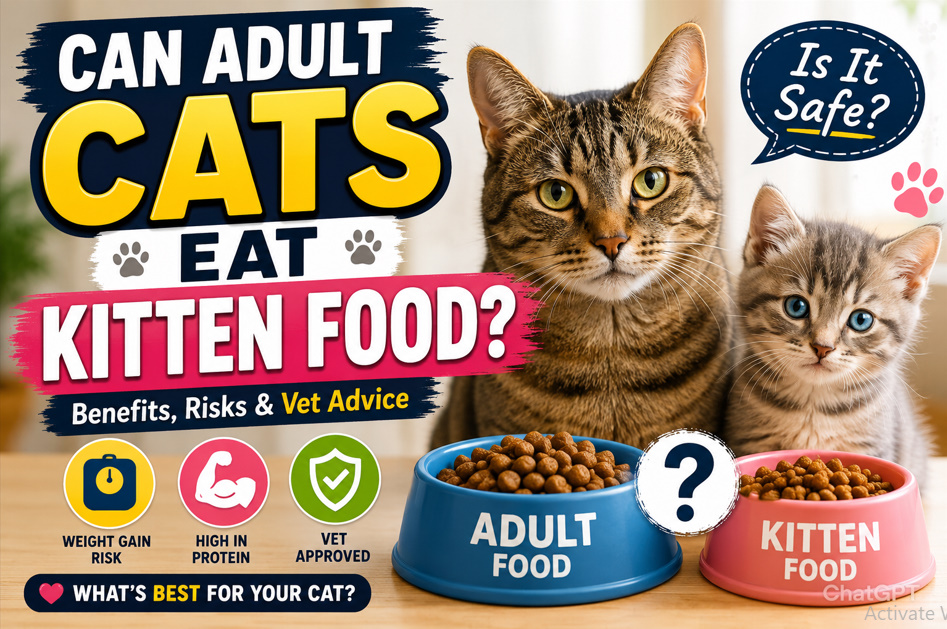
Many cat owners wonder whether adult cats can eat kitten food and if it is safe for their long-term health. While kitten food is specially formulated for growing kittens, adult cats may occasionally enjoy it. Understanding feline nutrition, calorie requirements, protein levels, and feeding guidelines helps ensure your cat stays healthy, active, and maintains an ideal weight throughout adulthood.
What Is the Difference Between Kitten Food and Adult Cat Food? 🥩
Kitten food contains higher protein, fat, calories, vitamins, and minerals to support rapid growth and development. Adult cat food is formulated to maintain healthy body weight and overall wellness. As a veterinary doctor, I often explain that nutritional requirements change significantly as cats mature, making age-appropriate diets important.
- 🐱 Kitten food supports rapid growth.
- 🍖 Higher protein content.
- 🔥 More calories per serving.
- 🧈 Increased fat levels.
- 🦴 Extra calcium for bones.
- 🧠 Supports brain development.
- ❤️ Rich in essential nutrients.
- 📈 Designed for growth stages.
- 🐾 Adult cats need maintenance diets.
- ✅ Age-specific nutrition matters.
Veterinary Advice: Feed food designed for your cat’s life stage whenever possible.
Can Adult Cats Safely Eat Kitten Food? 😺
Healthy adult cats can safely eat kitten food occasionally without major issues. However, regular feeding may provide excessive calories and fat. During my years as both a cat owner and veterinarian, I have seen many adult cats gain unnecessary weight when continuously eating kitten formulas.
- 😺 Safe as an occasional meal.
- 🍽️ Not ideal daily.
- ⚖️ Can cause weight gain.
- 🔥 Higher calorie intake.
- 🐾 Suitable in emergencies.
- 🥩 Rich protein source.
- 💪 Supports energy needs.
- 🚫 Avoid overfeeding.
- 🐱 Monitor body condition.
- ✅ Consult your veterinarian.
Veterinary Advice: Occasional consumption is generally safe, but long-term feeding is not recommended.
Why Do Adult Cats Love Kitten Food? 😻
Adult cats often prefer kitten food because it contains more fat and protein, making it highly palatable. In my clinic, many owners report their adult cats stealing food from kittens. The richer aroma and taste naturally attract cats and encourage enthusiastic eating behaviors.
- 😻 Stronger flavor profile.
- 🍗 Higher fat content.
- 👃 Appealing aroma.
- 🥩 Protein-rich recipe.
- 😋 Tastier texture.
- 🐾 Encourages eating.
- 🍽️ More satisfying taste.
- 🐱 Common food stealing behavior.
- ❤️ Highly palatable formulas.
- ✨ Designed for growth.
Veterinary Advice: Separate feeding stations if adult cats constantly steal kitten food.
Health Risks of Feeding Kitten Food to Adult Cats Long-Term ⚠️
Long-term consumption of kitten food may contribute to obesity, digestive issues, and nutritional imbalances. As a veterinarian, I have treated overweight cats whose owners unknowingly fed kitten food for years. Excess calories can place additional strain on joints, heart health, and overall feline wellness.
- ⚠️ Increased obesity risk.
- ⚖️ Excess calorie intake.
- 🦴 Joint stress.
- ❤️ Heart health concerns.
- 🍽️ Overeating tendencies.
- 🐱 Nutritional imbalance.
- 🔥 Excess body fat.
- 😿 Reduced activity levels.
- 📈 Weight management challenges.
- 🚫 Not ideal permanently.
Veterinary Advice: Transition adult cats to balanced maintenance diets after maturity.
When Might Adult Cats Benefit From Kitten Food? 🏥
Certain adult cats may temporarily benefit from kitten food. Underweight cats, recovering cats, pregnant cats, and nursing mothers sometimes require additional calories and nutrients. In clinical practice, I have successfully used kitten formulas to support recovery and healthy weight gain under veterinary supervision.
- 🏥 Helps underweight cats.
- 🤱 Useful for nursing mothers.
- 🐱 Supports pregnancy.
- 💪 Assists recovery.
- 🍖 Provides extra energy.
- 📈 Encourages weight gain.
- ❤️ Nutrient-dense formula.
- 🐾 Supports healing.
- 🍽️ Improves appetite.
- ✅ Veterinary guidance recommended.
Veterinary Advice: Use kitten food therapeutically only when medically appropriate.
How to Transition an Adult Cat From Kitten Food 🥣
A gradual transition helps prevent digestive upset and encourages acceptance of new food. As both a veterinarian and cat owner, I recommend mixing increasing amounts of adult cat food over seven to ten days while monitoring appetite, stool quality, and overall behavior.
- 🥣 Transition gradually.
- 📅 Use 7–10 days.
- 🍽️ Mix foods slowly.
- 🐱 Monitor appetite.
- 💩 Check stool consistency.
- 🚰 Ensure hydration.
- 😺 Watch behavior changes.
- ⚖️ Track body weight.
- 🐾 Reduce digestive stress.
- ✅ Be patient.
Veterinary Advice: Slow transitions reduce gastrointestinal problems significantly.
Best Feeding Practices for Multi-Cat Households 🏡
Homes with kittens and adult cats often face feeding challenges. I frequently advise owners to provide separate feeding areas and scheduled mealtimes. This strategy helps ensure each cat receives appropriate nutrition while preventing food theft and unhealthy weight gain.
- 🏡 Use separate feeding stations.
- 🚪 Feed in different rooms.
- ⏰ Schedule mealtimes.
- 🐱 Monitor food intake.
- 🍽️ Prevent food stealing.
- ⚖️ Maintain healthy weight.
- 👀 Observe eating habits.
- 🥩 Provide age-specific diets.
- ❤️ Support lifelong health.
- ✅ Regular veterinary checkups.
Veterinary Advice: Individual feeding plans work best in multi-cat households.
Conclusion 🐾
Adult cats can eat kitten food occasionally, but it should not become their primary diet unless recommended by a veterinarian. Kitten food contains higher calories, protein, and fat designed for growth. Choosing life-stage-appropriate nutrition supports healthy weight, optimal digestion, energy levels, and long-term feline health, ensuring your beloved cat thrives throughout adulthood.