
Introduction
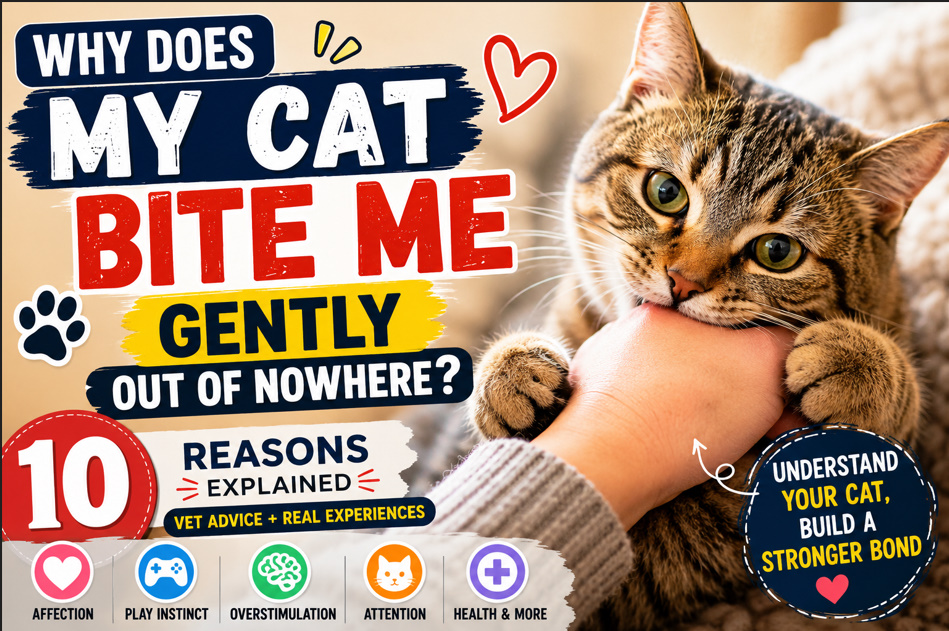
Have you ever been petting your cat peacefully when suddenly it gives you a gentle bite? 🐾 Many cat owners experience this confusing feline behavior. These soft nibbles often have hidden meanings related to affection, playfulness, communication, or overstimulation. Understanding why your cat gently bites can strengthen your bond and improve pet care. This guide explores cat body language, feline psychology, and veterinary insights to help decode your cat’s mysterious behavior.
Love Bites: Your Cat Is Showing Affection ❤️🐱
Cats sometimes give gentle bites as signs of affection, often called “love bites.” Similar to grooming behaviors among cats, these nibbles show trust and bonding. My own cat often gently bites my hand after cuddling on the sofa. This feline communication behavior is common among domesticated cats and reflects social bonding rather than aggression.
Veterinary Advice 👩⚕️: If the bite remains soft and doesn’t break the skin, it is usually normal cat behavior.
Quick Facts
- 🐾 Gentle bites can mean love.
- ❤️ Cats bond through grooming.
- 😺 Trust leads to affectionate nibbles.
- 🛋️ Cuddling often triggers bites.
- 🧠 Cats communicate differently.
- 🐱 Social cats nibble more.
- ✨ Bites can show happiness.
- 🐾 Observe body language.
- 😻 Purring often accompanies bites.
- 🌟 Positive interactions strengthen bonds.
Petting Aggression and Overstimulation ⚡🐾
Cats enjoy petting but may suddenly become overstimulated. When sensory overload occurs, they gently bite as a warning. My Persian cat often flicks its tail before giving a small nibble. Understanding feline overstimulation helps prevent unwanted biting and improves your relationship with your furry companion.
Veterinary Advice 👩⚕️: Stop petting when your cat shows signs like tail flicking or flattened ears.
Quick Facts
- ⚡ Too much petting causes stress.
- 🐈 Tail flicking signals discomfort.
- 👂 Flattened ears are warnings.
- 😾 Overstimulation is common.
- 🖐️ Learn your cat’s limits.
- 🐾 Watch body posture.
- 🧠 Cats have sensory thresholds.
- 🚫 Respect boundaries.
- 😊 Short sessions work better.
- 🌟 Every cat differs.
Play Hunting Instincts Are Natural 🐭🎯
Cats are natural predators with strong hunting instincts. Gentle biting may occur during play because your hands resemble prey. My kitten often grabs and softly bites during interactive games. This behavior reflects instinctive predatory behavior rather than aggression and is common among indoor cats.
Veterinary Advice 👩⚕️: Use toys instead of hands during play sessions.
Quick Facts
- 🐭 Cats are hunters.
- 🎯 Hands resemble prey.
- 🧶 Toys redirect instincts.
- 🐾 Kittens bite more often.
- 😺 Play builds confidence.
- 🏠 Indoor cats need stimulation.
- 🎮 Interactive toys help.
- 🧠 Hunting is instinctive.
- 🚫 Avoid rough play.
- 🌟 Exercise reduces biting.
Your Cat Wants Attention 👀💕
Sometimes gentle biting means your cat wants attention. Felines quickly learn behaviors that get human responses. My cat lightly bites my ankle before dinner time because it knows I’ll react. Attention-seeking behavior is common and may be reinforced unintentionally by owners.
Veterinary Advice 👩⚕️: Reward calm behavior instead of responding immediately to bites.
Quick Facts
- 👀 Cats seek interaction.
- 🍽️ Feeding times trigger bites.
- 🐾 Attention reinforces habits.
- 😺 Cats learn routines.
- 🧠 Positive reinforcement works.
- 🎯 Ignore mild attention bites.
- ❤️ Provide regular play.
- 🏠 Create routines.
- ✨ Enrichment reduces demands.
- 🌟 Consistency matters.
Grooming Behavior and Social Bonding 🛁🐈
Cats groom each other by licking and gently nibbling. If your cat nibbles you, it may consider you family. My cat often licks my hand before giving tiny bites. This allogrooming behavior demonstrates trust, companionship, and emotional attachment.
Veterinary Advice 👩⚕️: Gentle grooming bites are normal unless they become aggressive.
Quick Facts
- 🛁 Cats groom loved ones.
- ❤️ Nibbling strengthens bonds.
- 🐾 Licking often comes first.
- 😻 Grooming shows trust.
- 🧠 Social behavior is natural.
- 🏠 Indoor cats groom humans.
- 🌟 Family-like relationships develop.
- 😺 Relaxed cats groom more.
- ✨ Bonding improves wellbeing.
- 🐈 Observe gentle patterns.
Boredom Can Trigger Biting 🎾😿
A bored cat may gently bite due to lack of stimulation. Cats need mental and physical enrichment to stay happy. My indoor cat became less bitey after adding puzzle toys and climbing trees. Environmental enrichment is essential for feline wellness.
Veterinary Advice 👩⚕️: Provide scratching posts, toys, and climbing spaces daily.
Quick Facts
- 🎾 Bored cats bite more.
- 🏠 Indoor cats need enrichment.
- 🧶 Puzzle toys help.
- 🐾 Climbing reduces stress.
- 😺 Play prevents boredom.
- 🌳 Cat trees encourage activity.
- 🧠 Mental exercise matters.
- ✨ Rotate toys weekly.
- ❤️ Happy cats behave better.
- 🌟 Stimulation improves health.
Stress or Anxiety May Be the Cause 😟🐾
Changes in the environment can stress cats, leading to unexpected biting. Moving homes or introducing new pets often triggers anxiety. My cat became nibblier after we relocated. Feline stress can affect behavior and overall wellbeing.
Veterinary Advice 👩⚕️: Identify stressors and maintain a consistent routine.
Quick Facts
- 😟 Stress changes behavior.
- 🏠 Moving affects cats.
- 🐕 New pets create anxiety.
- 🐾 Routine brings comfort.
- 🎵 Quiet spaces help.
- ❤️ Patience is important.
- 🧠 Stress impacts health.
- ✨ Observe changes closely.
- 😺 Safe zones reduce fear.
- 🌟 Stability promotes wellness.
Teething in Kittens Causes Nibbling 🦷🐱
Kittens naturally bite during teething as new teeth emerge. Gentle chewing relieves gum discomfort. My kitten chewed fingers until I introduced chew-safe toys. Teething is temporary but requires proper management to prevent unwanted habits.
Veterinary Advice 👩⚕️: Offer kitten-safe chew toys during teething stages.
Quick Facts
- 🦷 Kittens lose baby teeth.
- 🐱 Teething causes discomfort.
- 🧶 Chew toys help.
- ⏳ Teething is temporary.
- 🐾 Redirect biting behavior.
- ❤️ Patience is key.
- 😺 Young cats explore mouths.
- 🧠 Early training matters.
- ✨ Healthy gums are important.
- 🌟 Proper toys prevent problems.
Medical Issues Can Influence Behavior 🏥😿
Sometimes pain or illness causes sudden biting. Dental disease, arthritis, or injuries may make cats sensitive to touch. One of my older cats became bitey due to dental discomfort. Health-related behavioral changes should never be ignored.
Veterinary Advice 👩⚕️: Schedule a veterinary examination if biting behavior suddenly changes.
Quick Facts
- 🏥 Pain changes behavior.
- 🦷 Dental disease is common.
- 🐾 Arthritis affects movement.
- 😿 Illness causes irritability.
- 👀 Watch for symptoms.
- ❤️ Early treatment helps.
- 🧠 Behavior reflects health.
- 📅 Regular checkups matter.
- ✨ Monitor appetite changes.
- 🌟 Prevention is best.
Learn to Read Cat Body Language 👁️🐈
Understanding feline body language helps predict bites. Tail position, ear movement, and pupil size reveal emotions. I learned my cat’s warning signs over time, which reduced unexpected nibbles. Better communication leads to happier cats and owners.
Veterinary Advice 👩⚕️: Study your cat’s signals to prevent misunderstandings.
Quick Facts
- 👁️ Eyes reveal emotions.
- 🐾 Tails communicate moods.
- 👂 Ears indicate feelings.
- 😺 Body language matters.
- 🧠 Observe daily patterns.
- ❤️ Communication builds trust.
- ✨ Prevention is easier.
- 🏠 Calm environments help.
- 🐈 Every cat is unique.
- 🌟 Understanding improves bonds.
Conclusion
Gentle cat bites may seem confusing, but they often express affection, playfulness, communication, or discomfort. By observing feline body language and understanding your cat’s needs, you can build a healthier relationship with your pet. If biting suddenly changes or becomes aggressive, consult a veterinarian. With patience and proper care, you’ll better understand your beloved feline companion. 🐱❤️