
🐱 Introduction
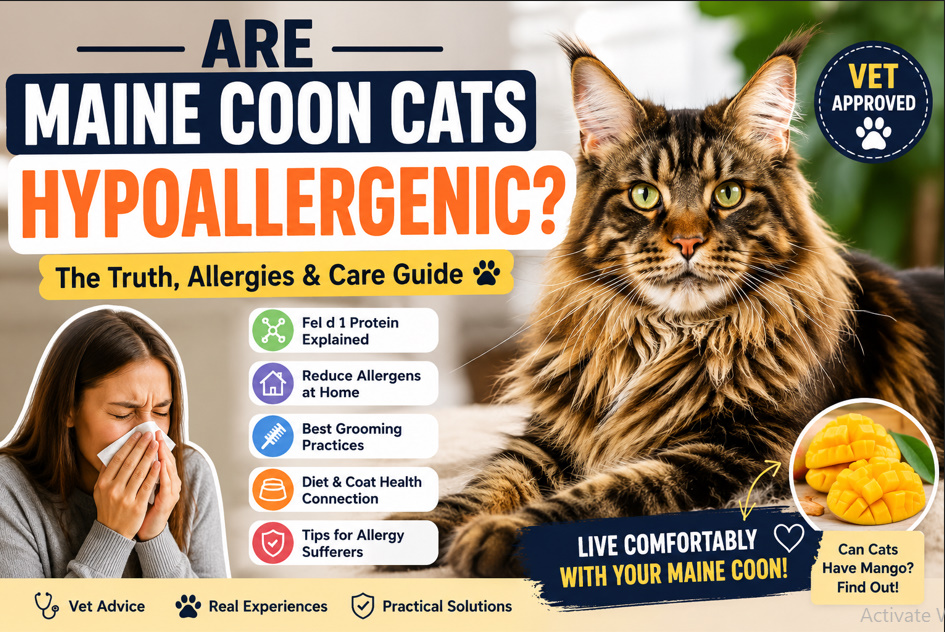
Are Maine Coon cats hypoallergenic? 🤧🐾 This is one of the most common questions among cat lovers with allergies. While Maine Coons are known for their gentle personality, majestic appearance, and affectionate nature ❤️, they still produce allergens that may affect sensitive individuals. In this guide, we’ll explore cat allergy symptoms, Fel d 1 protein, allergen management tips, grooming practices, diet effects, and expert veterinary advice to help you decide whether a Maine Coon is the right feline companion for your home. 🏡✨
Are Maine Coon Cats Hypoallergenic?
🐱 Many people searching for a hypoallergenic cat breed wonder if Maine Coon cats are allergy-friendly. While their affectionate personality and luxurious coat make them popular pets, they still produce allergens that may trigger reactions. As a veterinary doctor, I advise allergy sufferers to spend time with a Maine Coon before adoption. In my experience as both a cat owner and veterinarian, some allergy-sensitive families tolerated Maine Coons better than expected, while others still experienced sneezing, itchy eyes, and mild respiratory symptoms. 🩺✨
- 🐾 Maine Coons are not fully hypoallergenic.
- 😺 They still produce allergen proteins.
- 🧬 Genetics influence allergen production.
- 🤧 Sensitive owners may react.
- 🏠 Home cleaning reduces allergens.
- 🪮 Frequent grooming helps control shedding.
- 💨 Air purifiers improve indoor air.
- 🛋️ Allergens collect on furniture.
- 🚿 Regular coat care is beneficial.
- ❤️ Many allergy sufferers still own them.
- 👨⚕️ Veterinary guidance is recommended.
- 🐱 Test exposure before adoption.
Why No Cat Is 100% Hypoallergenic
😺 No cat breed is completely hypoallergenic because all cats produce proteins that can trigger allergic reactions. These proteins are found in saliva, skin oils, dander, and fur. As a cat doctor, I have seen allergic owners react to both long-haired and short-haired breeds. Proper pet care can reduce allergen exposure, but no breed guarantees an allergy-free experience. 🩺🐾
- 🧬 Every cat produces allergens.
- 😺 Saliva contains allergy proteins.
- 🐾 Dander spreads around homes.
- 🪮 Grooming helps reduce buildup.
- 🏠 Clean environments lower exposure.
- 🤧 Allergy severity varies.
- 💨 Ventilation improves air quality.
- 🛋️ Soft surfaces trap allergens.
- 🚿 Regular cleaning is important.
- ❤️ Individual tolerance differs.
- 👨⚕️ Consult an allergy specialist.
- 🐱 No breed is completely allergen-free.
What Causes Cat Allergies?
🤧 Cat allergies occur when the immune system overreacts to proteins produced by cats. Contrary to popular belief, fur itself is not usually the problem. As a veterinarian, I often explain that dander, saliva, and skin secretions carry allergens. During consultations, many owners were surprised to learn that even hairless cats can trigger allergic reactions. 🩺🐈
- 🧬 Allergens are proteins.
- 😺 Saliva spreads allergens.
- 🐾 Dander contains irritants.
- 🤧 Sneezing is common.
- 👀 Itchy eyes may occur.
- 💨 Breathing issues are possible.
- 🛋️ Furniture collects allergens.
- 🏠 Indoor exposure increases contact.
- 🧹 Frequent cleaning helps.
- ❤️ Reactions vary greatly.
- 👨⚕️ Seek medical advice if needed.
- 🐱 Understanding triggers improves management.
Understanding Fel d 1 Protein
🧬 Fel d 1 protein is the primary cat allergen responsible for most allergic reactions. Cats produce this protein in their saliva and skin glands, then spread it while grooming. As a veterinary doctor, I often discuss Fel d 1 during allergy consultations. In my clinical experience, reducing environmental exposure can significantly improve comfort for sensitive owners. 😺✨
- 🧬 Fel d 1 causes most allergies.
- 😺 Produced in saliva.
- 🐾 Found on skin.
- 🪮 Grooming spreads allergens.
- 🤧 Triggers sneezing and itching.
- 💨 Can become airborne.
- 🏠 Persists indoors.
- 🧹 Regular cleaning helps.
- ❤️ Exposure varies by cat.
- 👨⚕️ Veterinary advice is valuable.
- 🔬 Extensively studied allergen.
- 🐱 Key factor in cat allergies.
Do Maine Coon Cats Produce Fewer Allergens?
🐱 Some cat enthusiasts believe Maine Coons produce fewer allergens, but scientific evidence remains limited. Individual cats vary more than entire breeds. As a veterinarian, I have met allergy sufferers who managed well with Maine Coons and others who reacted strongly. I recommend focusing on allergen management, grooming routines, and household cleanliness rather than breed myths. 🩺✨
- 🐾 Research remains limited.
- 🧬 Individual variation matters.
- 😺 Some cats produce less allergen.
- 🤧 Reactions differ by owner.
- 🪮 Grooming reduces allergen spread.
- 🧹 Cleaning supports allergy control.
- 🏠 Air filtration is helpful.
- ❤️ Breed myths can mislead.
- 🔬 More studies are needed.
- 👨⚕️ Consult professionals before adoption.
- 🐱 Monitor allergy symptoms.
- ✨ Focus on practical management.
How Maine Coon Allergens Compare to Other Breeds
🐈 Maine Coon allergens are generally comparable to those of many other cat breeds. Their long coat may trap dander, but the coat itself does not create allergens. As both a cat owner and veterinary doctor, I have observed that individual allergen levels matter more than breed labels. Proper hygiene, grooming, and environmental care remain essential. 🩺🐾
- 🐱 All breeds produce allergens.
- 🧬 Individual cats differ.
- 🪮 Long fur traps dander.
- 😺 Fur does not create allergens.
- 🧹 Frequent cleaning helps.
- 💨 Air purifiers reduce particles.
- 🏠 Allergen control is important.
- ❤️ Some owners tolerate Maine Coons.
- 🤧 Others remain sensitive.
- 👨⚕️ Veterinary guidance is useful.
- 🔬 Breed differences are inconsistent.
- 🐾 Management improves comfort.
Common Allergy Symptoms From Maine Coon Cats
🤧 Maine Coon cats can trigger allergy symptoms in sensitive individuals due to proteins found in dander, saliva, and skin oils. As a veterinary doctor, I frequently meet owners who mistake seasonal allergies for pet allergies. In my experience as a cat owner and veterinarian, symptoms can range from mild irritation to persistent respiratory discomfort depending on allergen sensitivity and environmental exposure. 🐱🩺
- 🤧 Frequent sneezing episodes.
- 👃 Runny or stuffy nose.
- 👀 Itchy, watery eyes.
- 😷 Nasal congestion.
- 💨 Mild breathing difficulties.
- 😮💨 Wheezing in sensitive individuals.
- 🐾 Skin itching after contact.
- 🔴 Red or irritated skin.
- 🤕 Sinus pressure discomfort.
- 😴 Sleep disruption from symptoms.
- 👨⚕️ Seek medical evaluation if severe.
- 🐱 Monitor symptoms around cats.
How to Reduce Cat Allergens at Home
🏠 Managing cat allergens effectively can make life more comfortable for allergy sufferers. As a veterinarian, I often recommend combining cleaning routines, air filtration, and grooming practices. Many families I have worked with experienced noticeable improvements after implementing consistent allergen-control strategies, reducing airborne dander and improving indoor air quality. 🧹🐾
- 🧹 Vacuum carpets regularly.
- 💨 Use HEPA air purifiers.
- 🛏️ Wash bedding frequently.
- 🚪 Keep bedrooms cat-free.
- 🪟 Improve ventilation daily.
- 🧼 Clean surfaces often.
- 🐾 Remove loose fur promptly.
- 🚿 Bathe cats when appropriate.
- 🛋️ Vacuum furniture regularly.
- 😺 Maintain litter box hygiene.
- 👨⚕️ Follow veterinary recommendations.
- 🏠 Consistency improves results.
Best Grooming Tips for Maine Coon Cats
🪮 Maine Coons have thick, luxurious coats that require regular grooming to reduce shedding and dander buildup. As both a veterinarian and cat owner, I have found that routine grooming not only improves coat health but also helps minimize allergen accumulation within the home environment. 😺✨
- 🪮 Brush several times weekly.
- ✂️ Remove loose fur carefully.
- 🐾 Check for skin issues.
- 🚿 Use cat-safe shampoos.
- 😺 Trim mats promptly.
- 🧼 Clean grooming tools regularly.
- 💧 Provide fresh drinking water.
- 🌟 Maintain coat condition.
- 🐱 Groom gently and calmly.
- ❤️ Reward cooperative behavior.
- 👨⚕️ Seek help for severe matting.
- 🐾 Consistent grooming works best.
Can Diet Help Reduce Cat Allergens?
🥩 Nutrition plays an important role in skin and coat health, which may indirectly influence allergen distribution. As a veterinary doctor, I recommend balanced diets rich in essential nutrients. Some owners I have advised reported healthier coats and reduced shedding after improving dietary quality, though allergens themselves are not completely eliminated. 🐱🍗
- 🥩 Feed balanced nutrition.
- 🐟 Include omega fatty acids.
- 💧 Ensure proper hydration.
- 🌿 Support healthy skin.
- ✨ Promote coat quality.
- 🐾 Reduce excessive shedding.
- 🚫 Avoid poor-quality foods.
- 🍽️ Follow feeding guidelines.
- 😺 Monitor food sensitivities.
- ❤️ Consult your veterinarian.
- 👨⚕️ Choose age-appropriate diets.
- 🐱 Nutrition supports overall health.
Can Allergy Sufferers Live With Maine Coon Cats?
❤️ Many allergy sufferers successfully live with Maine Coon cats by managing allergen exposure carefully. As a veterinarian, I have seen families enjoy life with these gentle giants through grooming, cleaning, and medical support. Individual tolerance varies greatly, so spending time with a Maine Coon before adoption is highly recommended. 🐱🏠
- 😺 Many people coexist successfully.
- 🧹 Cleaning reduces exposure.
- 💨 Air filtration helps.
- 🪮 Grooming lowers dander buildup.
- 🏠 Create allergen-free zones.
- 🤧 Monitor symptom severity.
- 👨⚕️ Consult healthcare professionals.
- ❤️ Individual tolerance varies.
- 🐾 Limit bedroom access.
- 🚿 Wash hands after handling.
- 🐱 Spend time before adoption.
- ✨ Management is the key.
Medical Treatments for Cat Allergies
💊 Medical treatments can help allergy sufferers enjoy life with cats more comfortably. As a veterinary professional, I encourage owners to work closely with healthcare providers. Many clients have experienced significant relief through a combination of allergy medications, environmental controls, and personalized treatment plans. 🩺😺
- 💊 Antihistamines reduce symptoms.
- 👃 Nasal sprays may help.
- 💨 Inhalers assist some patients.
- 🩺 Consult an allergy specialist.
- 🤧 Address symptoms early.
- 📋 Follow treatment plans.
- 💉 Allergy shots may help.
- 😴 Improve sleep quality.
- ❤️ Manage symptoms consistently.
- 🏠 Combine with allergen control.
- 👨⚕️ Seek professional guidance.
- 🐱 Continue monitoring reactions.
Should You Adopt a Maine Coon if You Have Allergies?
🐱 Adopting a Maine Coon with allergies requires careful consideration rather than an automatic yes or no. As a veterinarian and long-time cat owner, I recommend testing your allergy response first. Many people successfully share their homes with Maine Coons through proactive allergen management and realistic expectations. ❤️🩺
- 🐱 Meet the cat beforehand.
- 🤧 Assess your reactions carefully.
- 🏠 Prepare your home.
- 🧹 Establish cleaning routines.
- 💨 Invest in air purifiers.
- 🪮 Commit to grooming.
- ❤️ Consider family allergies.
- 👨⚕️ Consult medical professionals.
- 📋 Create a management plan.
- 😺 Research the breed thoroughly.
- 🐾 Adopt responsibly.
- ✨ Make an informed decision.
🐾 Conclusion
Maine Coon cats are wonderful pets known for their intelligence, loyalty, and loving temperament 😺❤️. However, they are not truly hypoallergenic and can still trigger allergic reactions in some people. With proper grooming 🪮, allergen control 🧹, healthy nutrition 🍗, and medical support 🩺, many allergy sufferers can successfully live with these gentle giants. Understanding your allergy sensitivity and following expert recommendations will help you make a confident and informed adoption decision. 🏠🐱✨