
The Simple Answer Every Cat Owner Should Know
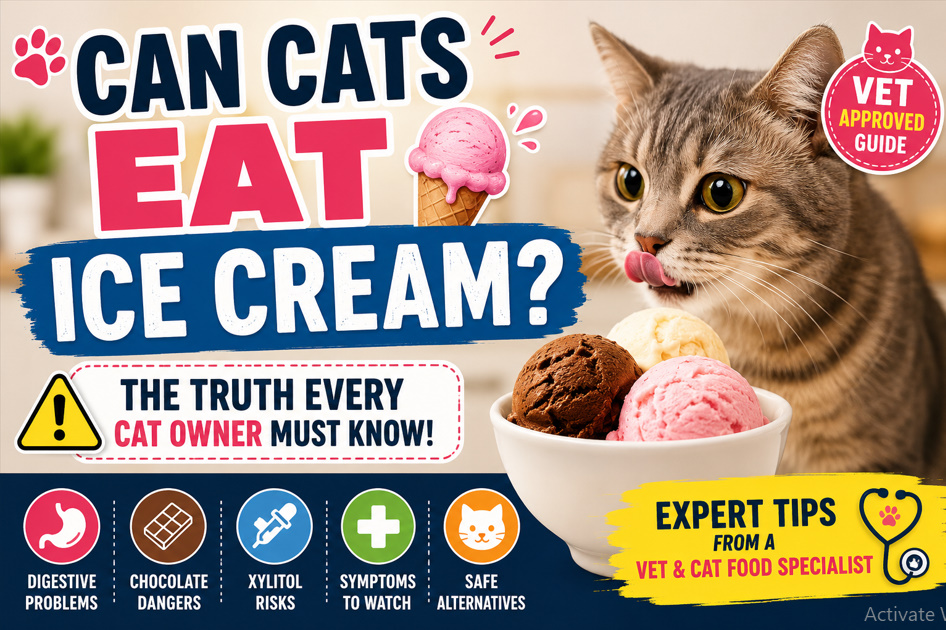
Can cats eat ice cream? Many cat owners ask this question when their feline friend seems interested in a frozen dessert. While ice cream may appear harmless, it can contain ingredients that are difficult or even dangerous for cats to consume. In this guide, you’ll learn about lactose intolerance, chocolate toxicity, sugar-free ice cream risks, safe alternatives, symptoms to watch for, and expert veterinary advice to keep your cat healthy.
Can Cats Eat Ice Cream?
Many cat owners wonder whether cats can eat ice cream as a special treat. The simple answer is that ice cream is not recommended for cats. Most cats are lactose intolerant, meaning their digestive systems struggle to process dairy products. While a small lick may not cause serious harm, regular consumption can lead to digestive discomfort and health concerns.
Ice cream also contains sugar, artificial flavors, and unhealthy fats that provide no nutritional benefits for felines. Cats thrive on high-protein diets designed for carnivores. As both a cat owner and veterinary professional, I have seen many cats develop stomach upset after consuming dairy treats. Choosing cat-safe snacks is always the healthier option.
Quick Facts About Cats and Ice Cream
- 🍦 Cats do not need ice cream.
- 🐱 Most cats are lactose intolerant.
- 🤢 Ice cream may cause diarrhea.
- 🥛 Dairy products upset many cats.
- ⚠️ Sugar offers no health benefits.
- 🍨 Artificial flavors can be harmful.
- ❤️ Protein is better for cats.
- 🦷 Sugar may affect dental health.
- 🐾 Cat treats are safer choices.
- ✅ Fresh water is always best.
Veterinary Advice
As a veterinary doctor, I advise cat owners to avoid giving ice cream regularly. Instead, offer veterinarian-approved cat treats or small portions of cooked meat. A balanced feline diet supports healthy digestion, weight management, and long-term wellness.
My Experience as a Cat Doctor and Owner
Over the years, I have treated several cats experiencing vomiting and loose stools after eating dairy desserts. My own cat once stole a spoonful of vanilla ice cream and developed mild stomach discomfort later that day. Since then, I have always recommended species-appropriate treats.
Chocolate Ice Cream Dangers for Cats
Chocolate ice cream is one of the most dangerous ice cream varieties for cats. Chocolate contains theobromine and caffeine, compounds that cats cannot process efficiently. Even small amounts may trigger symptoms such as restlessness, vomiting, increased heart rate, or digestive upset. Combining chocolate with dairy creates multiple health risks for felines.
Many pet owners mistakenly believe a tiny taste of chocolate ice cream is harmless. However, toxicity levels vary based on the cat’s size, age, and overall health. As a veterinary doctor, I strongly discourage offering chocolate-flavored desserts to cats. Safe feline treats are always a better alternative than human sweets.
Quick Facts About Chocolate Ice Cream and Cats
- 🍫 Chocolate is toxic to cats.
- ⚠️ Theobromine affects the nervous system.
- ❤️ Heart rate may increase.
- 🤮 Vomiting can occur.
- 😿 Cats may become restless.
- 🚫 Chocolate treats are unsafe.
- 🥛 Dairy adds digestive problems.
- 🐾 Emergency care may be needed.
- 📞 Contact a vet if consumed.
- ✅ Cat treats are safer choices.
Veterinary Advice
As a cat food specialist and veterinary doctor, I recommend keeping all chocolate products away from cats. If your cat accidentally eats chocolate ice cream, monitor for symptoms and contact a veterinarian immediately. Quick action can prevent complications and protect your cat’s health.
My Experience as a Cat Doctor and Owner
I once treated a young cat that consumed several spoonfuls of chocolate ice cream left unattended on a table. The cat became agitated and developed vomiting within hours. Fortunately, prompt veterinary treatment helped ensure a full recovery. Experiences like this highlight why prevention is so important.
Sugar-Free Ice Cream Risks for Cats
Sugar-free ice cream may sound healthier, but it can be even more dangerous for cats. Many sugar-free products contain artificial sweeteners and sugar substitutes. Some ingredients can upset a cat’s digestive system and may lead to vomiting, diarrhea, abdominal discomfort, or changes in behavior after consumption.
Another concern is that ingredient labels are often overlooked by pet owners. While not every sugar substitute is toxic, some can create significant health risks. Cats do not benefit from sweet foods, making sugar-free ice cream an unnecessary and potentially harmful treat that should be avoided completely.
Quick Facts About Sugar-Free Ice Cream and Cats
- 🚫 Sugar-free does not mean cat-safe.
- ⚠️ Artificial sweeteners may be harmful.
- 🤢 Digestive upset is common.
- 🐱 Cats do not need sweet foods.
- 📋 Always check ingredient labels.
- 🍨 Human desserts are unsuitable.
- 💧 Dehydration may follow diarrhea.
- 🏥 Severe reactions need veterinary care.
- ❌ Avoid sharing frozen treats.
- ✅ Choose feline-friendly snacks instead.
Veterinary Advice
As a veterinary doctor, I recommend avoiding all sugar-free desserts for cats unless specifically approved by a veterinarian. When selecting treats, prioritize products formulated for feline nutrition rather than human foods that may contain hidden ingredients.
My Experience as a Cat Doctor and Owner
Several cat owners have visited my clinic believing sugar-free desserts were a healthier option. In multiple cases, cats developed digestive discomfort shortly afterward. My own experience has taught me that sticking to species-appropriate treats is the safest approach for long-term feline health.
Ice Cream Fat Risks in Cats
Ice cream contains high levels of saturated fat that can negatively affect a cat’s health. Cats require dietary fat in moderation, but the excessive fat found in many frozen desserts may contribute to weight gain, digestive issues, and long-term health complications. Even occasional overconsumption can place unnecessary stress on a cat’s digestive system.
Obesity is becoming increasingly common among indoor cats. Foods like ice cream add empty calories without providing essential feline nutrients. As a cat food specialist and veterinary doctor, I often remind owners that treats should make up only a small percentage of a cat’s daily calorie intake. Healthy nutrition remains the foundation of feline wellness.
Quick Facts About Ice Cream Fat and Cats
- 🍦 Ice cream contains excess fat.
- ⚖️ Weight gain may occur.
- 🐱 Cats need balanced nutrition.
- 🤢 Fatty foods can upset digestion.
- ❤️ Obesity affects overall health.
- 🏥 Pancreatic stress may develop.
- 🚫 Human desserts are unsuitable.
- 🥩 Protein is more important.
- 🐾 Healthy treats are available.
- ✅ Portion control matters.
Veterinary Advice
As a veterinary doctor, I advise cat owners to avoid high-fat treats such as ice cream. Instead, choose nutritious options like veterinarian-approved treats, cooked chicken, or small portions of lean meat. Maintaining a healthy weight helps reduce the risk of diabetes, arthritis, and heart-related concerns.
My Experience as a Cat Doctor and Owner
Throughout my veterinary career, I have treated overweight cats whose diets included frequent human snacks. One owner regularly shared ice cream with their cat and noticed gradual weight gain over several months. After switching to healthier treats and following a proper feeding plan, the cat returned to a healthier condition.
Lactose Intolerance in Cats
Lactose intolerance is one of the primary reasons ice cream is not recommended for cats. Kittens produce lactase, the enzyme needed to digest their mother’s milk. As cats mature, lactase production decreases significantly. This means many adult cats cannot properly digest lactose-containing dairy products such as milk and ice cream.
When lactose is not digested correctly, it can ferment in the intestines and cause digestive discomfort. Symptoms may include diarrhea, bloating, gas, stomach cramps, and vomiting. Although some cats tolerate small amounts of dairy, many experience unpleasant reactions. Understanding feline digestion helps owners make safer dietary choices.
Quick Facts About Lactose Intolerance in Cats
- 🥛 Most adult cats are lactose intolerant.
- 🤢 Dairy can cause stomach upset.
- 💨 Gas and bloating may occur.
- 🚽 Diarrhea is a common symptom.
- 🐱 Kittens digest milk better.
- ⚠️ Adult cats process lactose poorly.
- 🍨 Ice cream contains dairy.
- 💧 Digestive issues may cause dehydration.
- 🐾 Cat-safe treats are preferable.
- ✅ Fresh water supports digestion.
Veterinary Advice
As a veterinary doctor and feline nutrition specialist, I recommend avoiding dairy-based treats for most cats. If you wish to offer a special snack, select products specifically formulated for cats. Monitoring your pet’s reaction to new foods can help prevent digestive complications.
My Experience as a Cat Doctor and Owner
Many cat owners are surprised to learn that the image of cats happily drinking milk is often misleading. In my clinic, I have seen numerous cases of diarrhea linked to dairy consumption. My own cat experienced mild digestive upset after consuming dairy products, reinforcing the importance of species-appropriate nutrition.
When to Call a Vet for Ice Cream Exposure
Not every case of ice cream consumption requires emergency treatment, but certain situations demand immediate veterinary attention. If your cat eats chocolate ice cream, sugar-free ice cream containing harmful sweeteners, or a large quantity of any ice cream, monitoring symptoms closely is essential. Early intervention can prevent serious complications and improve recovery outcomes.
Cats react differently depending on their age, weight, health condition, and the ingredients consumed. As a veterinary doctor, I recommend contacting a veterinarian whenever you are uncertain about the amount or type of ice cream eaten. It is always safer to seek professional advice than to wait for symptoms to worsen.
Signs You Should Call a Vet
- 📞 Chocolate ice cream was eaten.
- 🚨 Your cat is vomiting repeatedly.
- 😿 Severe diarrhea develops.
- ❤️ Rapid heartbeat is noticed.
- 🤢 Excessive drooling occurs.
- 🐾 Weakness becomes apparent.
- 😴 Extreme lethargy develops.
- 💨 Breathing seems abnormal.
- 🚽 Persistent digestive issues occur.
- 🏥 Symptoms continue for hours.
Veterinary Advice
As a cat food specialist and veterinary doctor, I advise contacting your veterinarian immediately if your cat consumes chocolate ice cream or shows unusual symptoms after eating any frozen dessert. Quick medical assessment can prevent complications and provide peace of mind.
My Experience as a Cat Doctor and Owner
I once examined a cat that appeared normal immediately after eating ice cream. Several hours later, the cat developed vomiting and dehydration. Prompt veterinary treatment helped the cat recover fully. This experience taught many owners that symptoms may not always appear right away.
Ice Cream Symptoms in Cats
The symptoms a cat experiences after eating ice cream depend on the ingredients involved and the cat’s digestive sensitivity. Many cats develop mild gastrointestinal upset due to lactose intolerance, while others may react to sugar, artificial additives, or excessive fat. Recognizing symptoms early helps owners respond appropriately.
Common signs include diarrhea, vomiting, bloating, and abdominal discomfort. More serious symptoms may occur if toxic ingredients such as chocolate are present. As both a veterinarian and cat owner, I encourage monitoring your cat closely for at least 24 hours following accidental ice cream consumption.
Common Ice Cream Symptoms in Cats
- 🤮 Vomiting may occur.
- 🚽 Diarrhea is common.
- 💨 Increased gas develops.
- 😿 Stomach discomfort appears.
- 💤 Lethargy may occur.
- 😾 Irritability can develop.
- 💧 Dehydration is possible.
- 🍽️ Appetite may decrease.
- 🤢 Nausea can occur.
- ⚠️ Symptoms vary by ingredient.
Veterinary Advice
As a veterinary doctor, I recommend providing fresh water and observing your cat carefully if mild symptoms occur. If symptoms become severe, persist beyond a day, or include neurological signs, seek veterinary care immediately.
My Experience as a Cat Doctor and Owner
Over the years, the most common ice cream-related issue I have treated is diarrhea caused by lactose intolerance. In many cases, symptoms resolved within a day with proper hydration and monitoring. However, some cats required additional treatment due to dehydration and stomach irritation.
What to Do If Your Cat Eats Ice Cream
If your cat accidentally eats ice cream, remain calm and identify the type and amount consumed. Determine whether the ice cream contains potentially dangerous ingredients such as chocolate, coffee flavoring, artificial sweeteners, nuts, or excessive sugar. This information will help your veterinarian assess the level of risk.
Next, monitor your cat for digestive upset or behavioral changes. Ensure access to fresh drinking water and avoid offering additional treats or dairy products. Most cats that consume a small amount of plain vanilla ice cream experience only mild symptoms, but every situation should be evaluated carefully.
Steps to Take After Ice Cream Consumption
- 🍦 Identify the ice cream flavor.
- 📋 Check ingredient labels.
- 🐱 Estimate the amount eaten.
- 💧 Provide fresh water.
- 👀 Monitor your cat closely.
- 🚫 Avoid more dairy products.
- 📞 Contact a veterinarian if unsure.
- 🤮 Watch for vomiting.
- 🚽 Monitor litter box activity.
- 🏥 Seek emergency care if needed.
Veterinary Advice
As a cat food specialist and veterinary doctor, I recommend keeping a record of the product name, ingredients, and amount consumed. This information helps veterinarians provide accurate recommendations and determine whether emergency treatment is necessary.
My Experience as a Cat Doctor and Owner
Many worried owners have contacted me after discovering their cat licking melted ice cream from a bowl. In most cases involving plain ice cream, careful monitoring was sufficient. However, situations involving chocolate or unusual ingredients required immediate veterinary consultation, emphasizing the importance of quick action and ingredient awareness.
Can Kittens Eat Ice Cream?
Kittens are often perceived as better able to tolerate dairy because they consume their mother’s milk. However, ice cream is not an appropriate food for kittens. It contains sugar, fat, artificial ingredients, and dairy components that may upset a kitten’s developing digestive system.
Although kittens produce more lactase than adult cats, ice cream still lacks the nutrients required for healthy growth and development. High-quality kitten food provides the protein, vitamins, minerals, and calories needed during this important life stage. Ice cream should never replace balanced kitten nutrition.
Facts About Kittens and Ice Cream
- 🐱 Kittens need proper nutrition.
- 🥛 Ice cream is not kitten food.
- 🍦 Contains unnecessary sugar.
- 🤢 May cause stomach upset.
- ⚖️ Adds empty calories.
- 🚫 Not nutritionally complete.
- 🦴 Growth requires balanced diets.
- 💧 Water is essential.
- 🥩 Protein supports development.
- ✅ Kitten food is best.
Veterinary Advice
As a veterinary doctor and feline nutrition specialist, I recommend feeding kittens only high-quality kitten diets and approved treats. Their developing bodies require precise nutrition that ice cream cannot provide.
My Experience as a Cat Doctor and Owner
I have occasionally seen kittens develop diarrhea after consuming dairy-based treats. Concerned owners often assumed the milk content was harmless. In most cases, eliminating inappropriate foods and returning to a balanced kitten diet quickly resolved the problem.
Why Cats Cannot Digest Dairy and Sugar
Many people associate cats with milk, but the reality is quite different. Most adult cats have difficulty digesting dairy products because their bodies produce very little lactase, the enzyme responsible for breaking down lactose. When lactose remains undigested, it can cause digestive discomfort, diarrhea, bloating, and gas.
Sugar is another ingredient that cats are not designed to process efficiently. Cats are obligate carnivores and have nutritional requirements centered around animal protein rather than carbohydrates and sweet foods. As a veterinary doctor and cat food specialist, I often explain that a cat’s digestive system is fundamentally different from a human’s and functions best on species-appropriate nutrition.
Why Cats Struggle With Dairy and Sugar
- 🥛 Most cats are lactose intolerant.
- 🤢 Dairy may cause diarrhea.
- 💨 Bloating can develop.
- 🍬 Cats do not need sugar.
- 🐱 Feline diets require protein.
- ⚠️ Sweet foods offer no benefits.
- 🍦 Ice cream can upset digestion.
- 🚫 Sugar adds empty calories.
- ❤️ Proper nutrition supports health.
- ✅ Meat-based diets are best.
Veterinary Advice
As a veterinary doctor, I recommend avoiding sugary and dairy-based treats whenever possible. Instead, focus on high-quality cat food and healthy protein-rich snacks designed specifically for feline nutritional needs.
My Experience as a Cat Doctor and Owner
Throughout my career, I have treated many cats suffering from digestive upset after consuming milk, ice cream, and other dairy products. My own cat experienced mild diarrhea after licking a dairy dessert, confirming how common lactose sensitivity can be among felines.
Best Frozen Treats for Cats
If you want to help your cat cool down during warm weather, there are safer alternatives than ice cream. Frozen cat treats made from species-appropriate ingredients can provide enrichment and hydration without exposing cats to lactose, excessive sugar, or unhealthy fats. These treats can be both enjoyable and nutritious.
Many cat owners successfully prepare homemade frozen snacks using cat-safe ingredients. Small frozen portions of wet cat food, pureed tuna in water, or veterinarian-approved frozen treats can satisfy your cat’s curiosity while supporting healthy nutrition. These options are far better than sharing human desserts.
Best Frozen Treat Options for Cats
- 🐟 Frozen tuna water cubes.
- 🍗 Frozen chicken broth cubes.
- 🐱 Frozen wet cat food.
- 💧 Ice cubes for play.
- 🥩 Frozen meat puree treats.
- 🍖 Chilled cooked chicken pieces.
- 🐾 Veterinary-approved frozen snacks.
- 🌡️ Cooling treats for hot days.
- 🍴 Small portions only.
- ✅ Healthy feline alternatives.
Veterinary Advice
As a cat food specialist and veterinary doctor, I recommend selecting frozen treats that are low in salt, free from sugar, and specifically designed for feline health. Always introduce new treats gradually and monitor your cat’s reaction.
My Experience as a Cat Doctor and Owner
Many clients ask for safe summer treats. I often recommend frozen wet food portions, which are usually well accepted by cats. My own cat enjoys frozen tuna-water cubes during hot weather and experiences none of the digestive problems associated with dairy desserts.
Preventing Cats From Eating Desserts
Cats are naturally curious and may investigate bowls, plates, and countertops containing desserts. Preventing access to ice cream, cakes, cookies, and other sweets is one of the best ways to protect your cat from accidental exposure to harmful ingredients. Prevention is often easier than dealing with the consequences of digestive upset.
Desserts can contain chocolate, artificial sweeteners, caffeine, raisins, nuts, and excessive sugar, all of which may pose health risks. As a veterinary doctor, I encourage cat owners to create a pet-safe environment where potentially dangerous foods remain out of reach at all times.
Tips to Prevent Dessert Exposure
- 🚫 Never leave desserts unattended.
- 🍫 Store chocolate securely.
- 🧁 Keep sweets off counters.
- 🗑️ Use covered trash bins.
- 👀 Supervise curious cats.
- 🏠 Secure food storage areas.
- 📦 Check ingredient labels.
- 🐱 Offer healthy cat treats.
- 🍽️ Clean dishes immediately.
- ✅ Educate family members.
Veterinary Advice
As a veterinary doctor and feline nutrition expert, I advise establishing household rules about feeding pets. Inform family members and guests that human desserts should never be offered to cats, regardless of how interested they appear.
My Experience as a Cat Doctor and Owner
One memorable case involved a cat that climbed onto a kitchen counter and consumed part of a dessert left unattended overnight. The cat developed digestive symptoms the next morning and required veterinary evaluation. Since then, I regularly remind owners that proper food storage is one of the simplest ways to prevent accidents.
Conclusion
Although a small lick of plain ice cream may not always cause serious harm, ice cream is generally not a safe treat for cats. Dairy, sugar, unhealthy fats, and potentially toxic ingredients can lead to digestive issues and other health concerns. As a veterinary professional and cat owner, I recommend choosing cat-safe treats and a balanced, protein-rich diet. Understanding the risks helps ensure your feline companion stays healthy, happy, and protected.